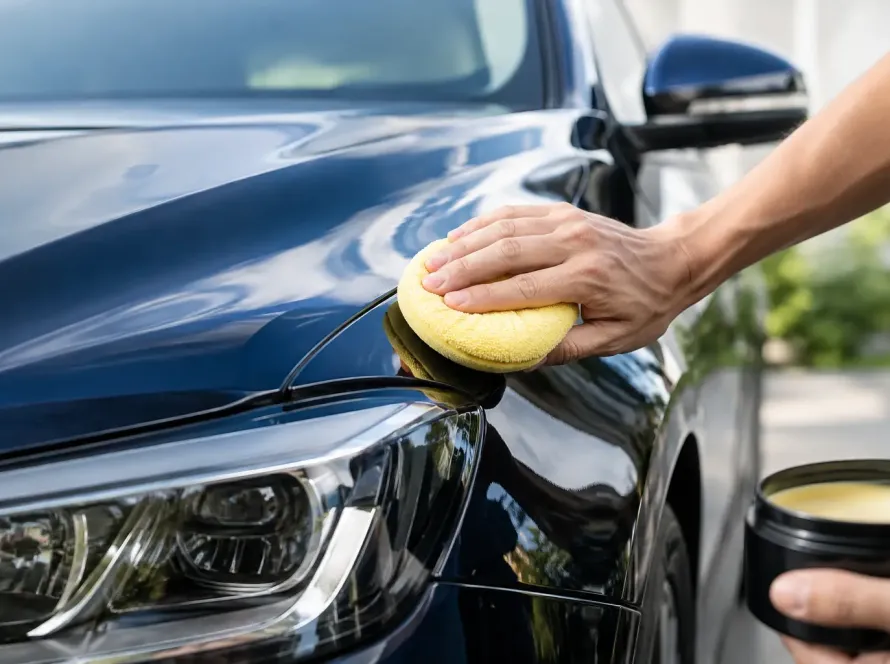
A car can look remarkably different after only a few Maltese summers. The once-rich black that reflected every detail can turn grey and flat. Red may lose its depth, while metallic paint appears cloudy rather than crisp. Understanding why car paint fades is the first step towards preventing a tired finish and protecting the value you see every time you approach your vehicle.
Paint fading is not simply dirt sitting on the surface. It is a gradual loss of clarity, pigment strength and gloss within the paint system itself. A quick wash may make a faded car look cleaner, but it cannot replace the depth that sunlight, heat and contamination have taken away. Proper correction and long-term protection are what restore the difference.
Why Car Paint Fades Under Malta’s Sun
The leading cause is ultraviolet radiation. Modern vehicle paint is made up of several layers: primer, colour coat and a clear coat designed to provide gloss and protection. UV rays slowly break down the chemical bonds in that upper clear coat. As it oxidises, the surface becomes less smooth and less transparent, so the colour beneath no longer looks as vibrant.
Malta creates demanding conditions for any exterior finish. Intense sunshine, high summer temperatures and frequent outdoor parking expose paint to repeated thermal stress. A dark-coloured car can become exceptionally hot in direct sun. As panels heat up and cool down, the coating expands and contracts, accelerating wear in an already weakened clear coat.
Red, blue and darker shades often reveal fading sooner because changes in their pigment and depth are easier to see. White and silver paint can fade too, but the early signs are often mistaken for a lack of washing. On pale vehicles, the first warning may be a chalky feel, muted reflections or a yellowed appearance rather than an obvious change in colour.
The roof, bonnet and boot lid usually show the greatest damage first. These horizontal panels receive the strongest direct sunlight, collect dust and airborne fallout, and are often missed when protection is applied quickly or inconsistently.
Oxidation: The Dull Layer You Can See
Oxidation occurs when the paint surface reacts with oxygen, UV radiation and moisture over time. It creates a dry, hazy appearance that scatters light instead of reflecting it cleanly. Run a hand over severely oxidised paint and it may feel rough, even immediately after washing.
At an early stage, oxidation can often be corrected safely through professional polishing. Once the clear coat has failed completely, however, no amount of polishing, wax or ceramic coating can recreate it. The affected panel needs repainting. That is why timely assessment matters: paint correction is a preservation service, not magic over damaged material.
Salt, Dust and Everyday Contamination
Sunlight may be the main culprit, but it rarely works alone. Coastal air carries salt, and salt residue attracts moisture and can sit on paint for extended periods. Road film, brake dust, bird droppings, tree sap, insects and industrial fallout all compromise the surface if left untreated.
Bird droppings are particularly aggressive in hot weather. Their acidic content can etch into a warm clear coat surprisingly quickly, leaving dull marks or permanent outlines. Tree sap hardens under the sun, while traffic film bonds to the paint and dulls its finish. These contaminants do not always cause broad fading, but they create localised damage that makes the whole vehicle appear neglected.
Poor washing habits add another layer of wear. Washing with harsh household detergents, using an old sponge, or repeatedly running a dusty car through abrasive brushes can strip protection and create fine scratches. Those scratches catch the light, reducing gloss and making faded areas look more pronounced.
The Difference Between Fading, Swirl Marks and Clear-Coat Failure
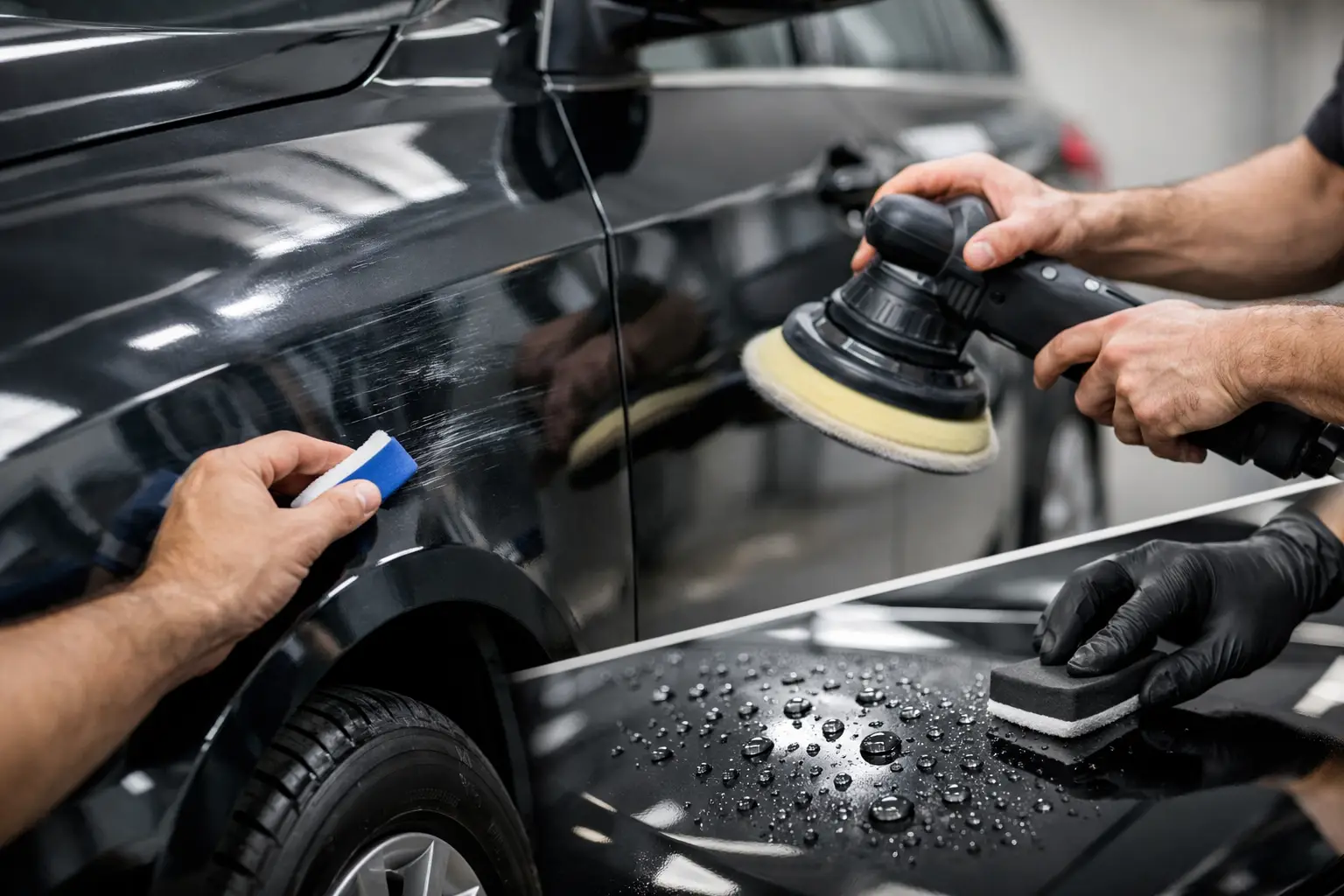
Not every dull car has faded paint, and this distinction determines the right treatment. Swirl marks are fine circular scratches, commonly visible under direct sunlight or strong inspection lighting. They dull reflections but are often correctable with carefully measured machine polishing.
Oxidation is a loss of clarity in the clear coat. It may appear as a uniform haze, a chalky texture or a reduction in colour richness. A professional detailer can assess whether the dullness is surface contamination, oxidation, scratching or a combination of all three.
Clear-coat failure is more serious. It can look like peeling, flaking, cracking or pale patches that do not improve when wet. At this point, the protective layer has deteriorated beyond correction. Polishing it would only remove more compromised material. Repainting is the responsible solution, followed by protection once the new paint has cured correctly.
This is one reason a standard valet is not a substitute for paint care. Clean paint can still be damaged paint. The finish needs to be inspected in proper lighting, decontaminated, measured where appropriate, and corrected with an approach suited to its actual condition.
How to Protect Paint Before It Loses Its Gloss
The most effective strategy combines sensible ownership habits with a professional protective treatment. No coating makes a vehicle invincible, and every product requires maintenance. However, the right preparation and protection can dramatically reduce the pace at which paint loses its gloss.
Start with regular, safe washing. Remove dust, salt and road film before they have time to bond to the finish. Avoid washing in direct sun where possible, as water and shampoo can dry too quickly and leave mineral spotting. Use pH-neutral car-care products and clean wash media, then dry the vehicle rather than allowing hard-water deposits to remain on the panels.
Parking choices matter too. Covered parking offers the best defence against UV exposure. If that is not practical, seek shade where possible, particularly during long workdays or airport stays. A quality, breathable car cover can help for vehicles parked for extended periods, provided the car is clean before it is covered. Trapping dust beneath a cover can cause fine marring.
Wax, Sealant or Ceramic Coating?
Traditional wax can enhance gloss and add a sacrificial barrier, making it an excellent option for owners who enjoy frequent maintenance. Its trade-off is durability: heat, washing and weather gradually reduce its protection, so it needs regular reapplication.
Synthetic paint sealants typically last longer than wax and offer dependable protection from weathering. They can be a practical choice for daily-driven vehicles where the owner wants durable gloss without a more intensive coating process.
A professional ceramic coating offers a more durable, chemically resistant protective layer when applied over fully prepared paint. It improves water behaviour, helps reduce contamination bonding and can preserve a richer finish for longer. It does not prevent stone chips, eliminate the need for washing or repair existing scratches. For physical protection against chips and abrasion on high-impact areas, paint protection film is the stronger option.
The right choice depends on the vehicle, its condition, where it is parked and how it is used. A weekend performance car stored indoors has different needs from a daily driver parked outside near the coast. The key is not choosing the most advertised treatment, but choosing the protection that matches real-world exposure.
Can Faded Paint Be Restored?
Often, yes. When fading is caused by surface oxidation, embedded contamination and fine scratching, paint correction can restore striking clarity. This process uses specialist polishing combinations to remove a controlled amount of damaged clear coat, levelling the surface so it reflects light properly again.
The improvement can be transformative, but correction should never be aggressive for the sake of a short-term shine. Paint thickness is finite. An experienced specialist aims for the best safe improvement, preserving as much healthy clear coat as possible for the future. Deep scratches, stone chips and failed clear coat require a different conversation and, sometimes, targeted paintwork.
After correction, protection is essential. Leaving newly polished paint unprotected exposes its refined surface to the same UV, salt and contamination that caused the original decline. At GloboWax Malta, the focus is on pairing careful correction with protection that keeps the restored finish looking exceptional for longer.
A premium finish is not created by one dramatic treatment alone. It is maintained through timely washing, thoughtful parking and professional protection before the damage becomes irreversible. Give the paint the same consideration you give the engine and interior, and your vehicle will continue to reflect the standard you expect from it.