That sharp swirl pattern you notice under Malta’s midday sun is rarely just a cosmetic annoyance. It is usually the sign of a finish that has been slowly dulled by poor wash methods, road grit, UV exposure and everyday use. Paint correction and scratch removal address that damage at its source, restoring clarity, depth and gloss in a way a standard wash or quick polish simply cannot.
For owners who care about how their vehicle looks and what it is worth, this matters. A well-kept finish does more than turn heads in a car park. It reflects careful ownership, protects the bodywork from further deterioration and helps preserve long-term resale value. Done properly, correction work is not about covering faults for a few weeks. It is about refining the paintwork with precision so the finish looks cleaner, sharper and far more refined.
What paint correction and scratch removal actually mean
These two services are often mentioned together, but they are not quite the same thing. Paint correction is the process of removing or significantly reducing surface defects within the clear coat. That includes swirl marks, light oxidation, water spotting, haze, buffer trails and fine scratches that make the paint look flat or tired.
Scratch removal is more specific. It focuses on reducing or eliminating visible scratches where the damage has not gone too deep. Some marks sit only in the upper layer of the clear coat and can be safely corrected. Others cut beyond that layer and may need touch-up work, wet sanding in skilled hands, or in more severe cases, repainting.
This is where expertise makes the difference. Every vehicle, every paint system and every defect pattern requires a measured approach. Premium detailing is not about attacking paint aggressively. It is about removing the least amount of material necessary to achieve the greatest possible improvement.
Why your car picks up defects so easily
Modern paintwork can look stunning, but it is also more vulnerable than many owners realise. Even careful drivers can end up with a finish covered in marks. Automatic car washes, low-quality wash mitts, dirty drying towels and rushed valeting techniques are common causes. Add airborne contamination, bird droppings, tree sap, hard water deposits and strong sun, and the finish starts to lose its crispness.
Dark-coloured cars often reveal these defects more clearly, especially black, navy and deep grey finishes. Lighter colours are not immune, but the damage may be less obvious until the paint begins to look dull rather than glossy. In both cases, the issue is the same – light is no longer reflecting evenly from the surface.
That is why many cars still look tired even after they have been cleaned. Dirt may be gone, but the paint itself is still scarred.
The professional process behind paint correction and scratch removal
Real correction begins well before a machine polisher touches the panel. The vehicle is first washed thoroughly using safe methods designed to minimise further marring. Decontamination follows, removing bonded fallout, tar, iron particles and residue that sit on the surface and interfere with the polishing stage.
The paint is then assessed under proper lighting. This reveals the true condition of the finish, including swirls, random deeper scratches, oxidation and any previous poor-quality polishing work. Paint depth readings may also be taken to understand how much safe material is available to work with.
Inspection determines the result
This stage is where quality control starts. Not every scratch should be chased completely, and not every panel should be corrected to the same level. A responsible detailer balances improvement with preservation. On a newer prestige vehicle, the aim may be to refine the finish while keeping as much clear coat intact as possible. On an older daily driver, the focus might be on dramatically improving gloss and reducing visible wear without overworking thin areas.
Machine polishing with purpose
Once the paint has been properly assessed, polishing begins using carefully selected compounds, pads and machine combinations. A one-stage correction can remove a large percentage of light defects and noticeably increase gloss. A multi-stage correction is more intensive and aims for a higher level of clarity by cutting defects first and refining the finish afterwards.
There is no single formula that suits every car. Softer paint may correct quickly but can also haze if handled poorly. Harder paint may require more cutting power and time. The skill lies in matching the process to the paint, not forcing the paint to suit the process.
Can every scratch be removed?
Not completely, and any honest specialist should say so. If a scratch has only affected the clear coat, it often responds very well to polishing. If it catches a fingernail deeply, has sharp white edges or exposes the base layer beneath, full removal may not be possible without repainting.
That does not mean the result will be disappointing. Many deeper scratches can be softened dramatically so they stop drawing the eye. The panel looks cleaner, more uniform and far better finished, even if a trace remains under close inspection.
This is one of the biggest differences between realistic professional detailing and overpromising sales talk. The right service should improve the vehicle safely, not chase perfection at any cost.
Why a quick polish is not the same thing
A machine polish offered as an add-on at a car wash or general valet service often aims to create temporary gloss rather than true correction. In some cases, fillers or glaze products are used to mask defects. The paint may look better for a short time, but once those products wash away, the swirls and scratches return.
Professional paint correction and scratch removal go further. The improvement comes from physically refining the damaged upper layer of paint, not hiding it. That takes time, proper lighting, skilled technique and the discipline to work panel by panel.
For owners of premium, performance or carefully maintained daily vehicles, this distinction matters. The result is not just shine. It is sharper reflections, improved depth of colour and a finish that holds its quality because it has been corrected properly.
Protection should always follow correction
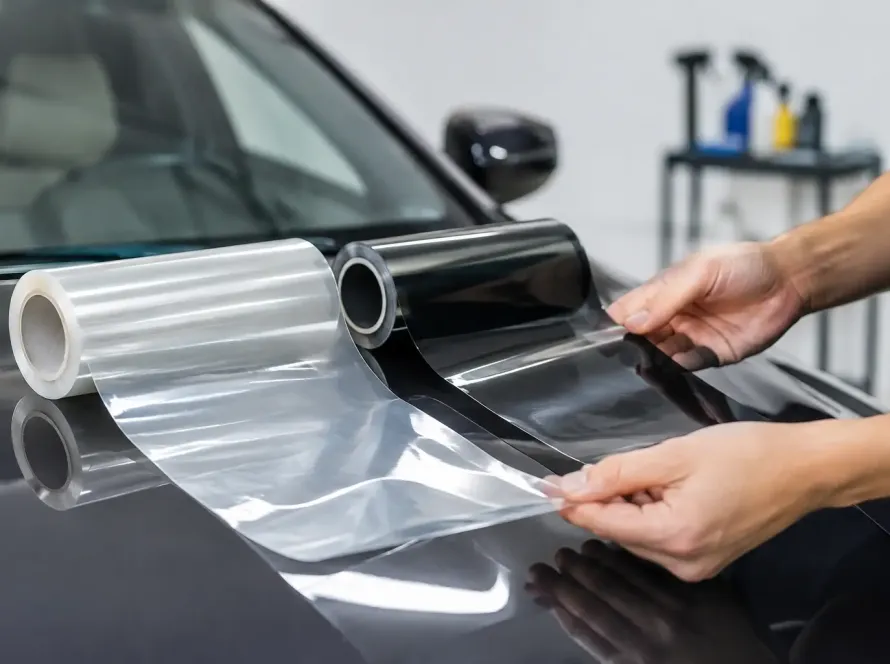
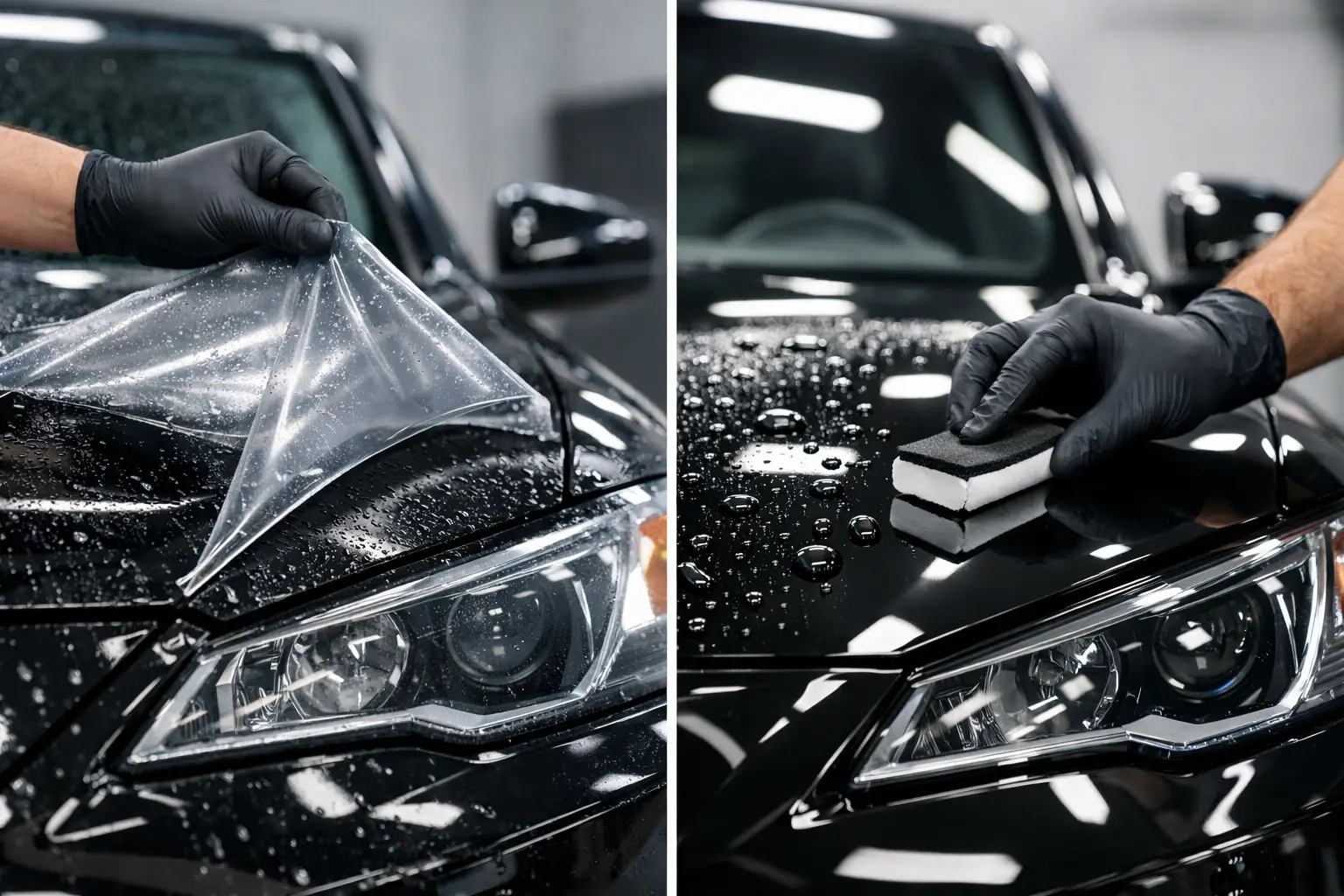
Once defects have been reduced and the surface has been refined, protecting that finish becomes the next priority. Freshly corrected paint is clean, clear and visually transformed, but without protection it is still exposed to the same environmental pressures that caused the damage in the first place.
A quality wax, sealant or ceramic coating helps preserve the result by adding a sacrificial layer of protection. The right option depends on how the car is used, how often it is washed and the level of durability the owner wants. Ceramic coatings, in particular, are popular for vehicles that need longer-lasting chemical resistance, easier maintenance and a more consistent gloss.
Protection is not a substitute for correction, and correction is not complete without protection. The two work best together.
When it is worth booking paint correction and scratch removal
If your paint looks dull in direct light, if swirl marks are obvious after washing, or if isolated scratches are starting to spoil the overall appearance, it is usually the right time to act. Leaving defects untreated does not always make them worse immediately, but it does allow the finish to continue ageing without intervention.
Correction is especially worthwhile before applying a ceramic coating, before selling a vehicle, after buying a used car, or when restoring a cherished vehicle to a higher standard. It is also ideal for owners who are simply tired of seeing their car look less impressive than it should.
At a premium level, the value is clear. A corrected and protected vehicle looks better every day, cleans more easily and presents itself with the level of care it deserves. For many owners, that confidence is reason enough.
At GloboWax Malta, the standard is not a quick improvement for the sake of appearance. It is precise, considered refinement designed to enhance and preserve the finish properly.
A great paint finish should look effortless, but the work behind it never is. When correction is done with skill, restraint and the right protective follow-up, your car does not just look newer – it looks cared for in the way a premium vehicle should.