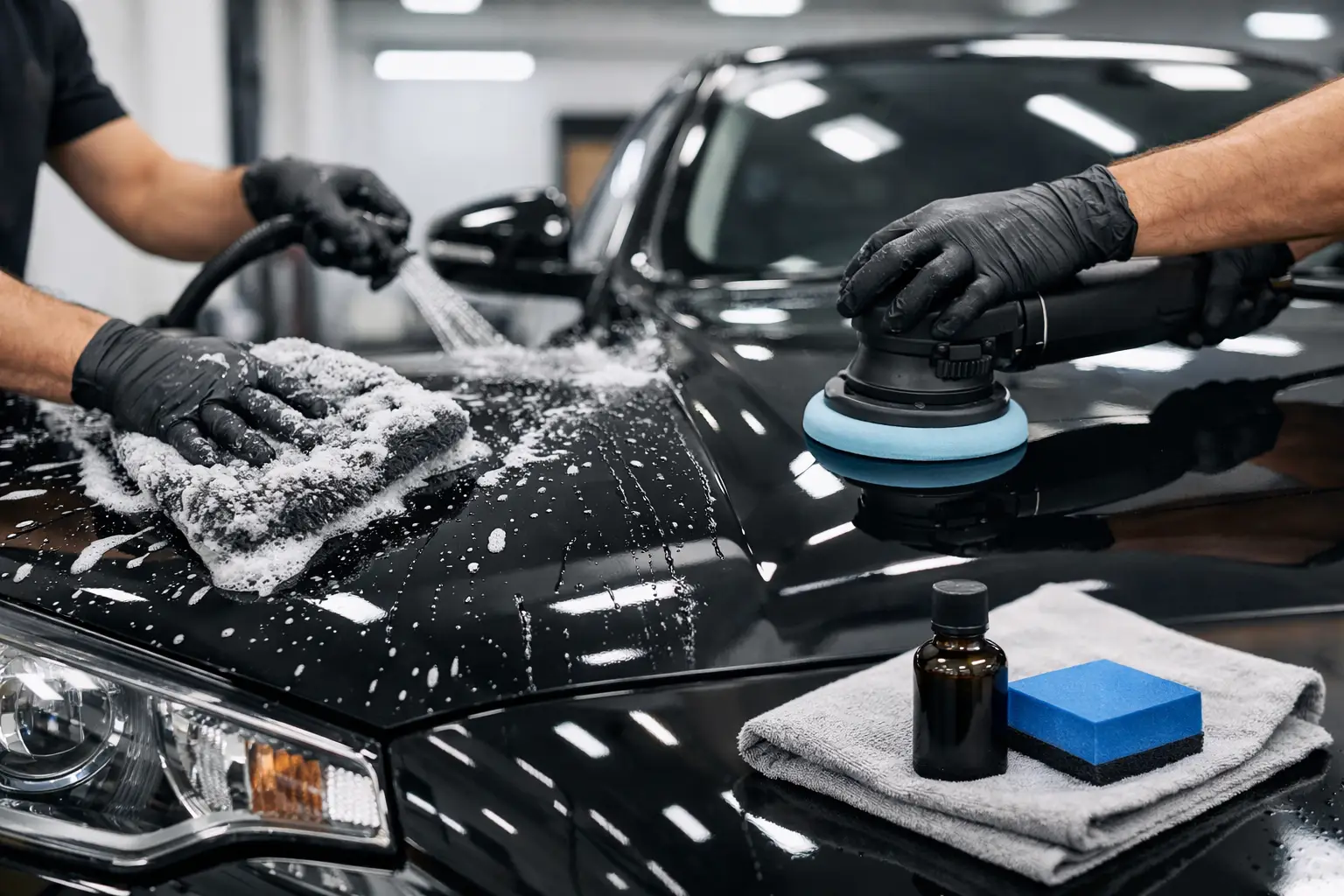
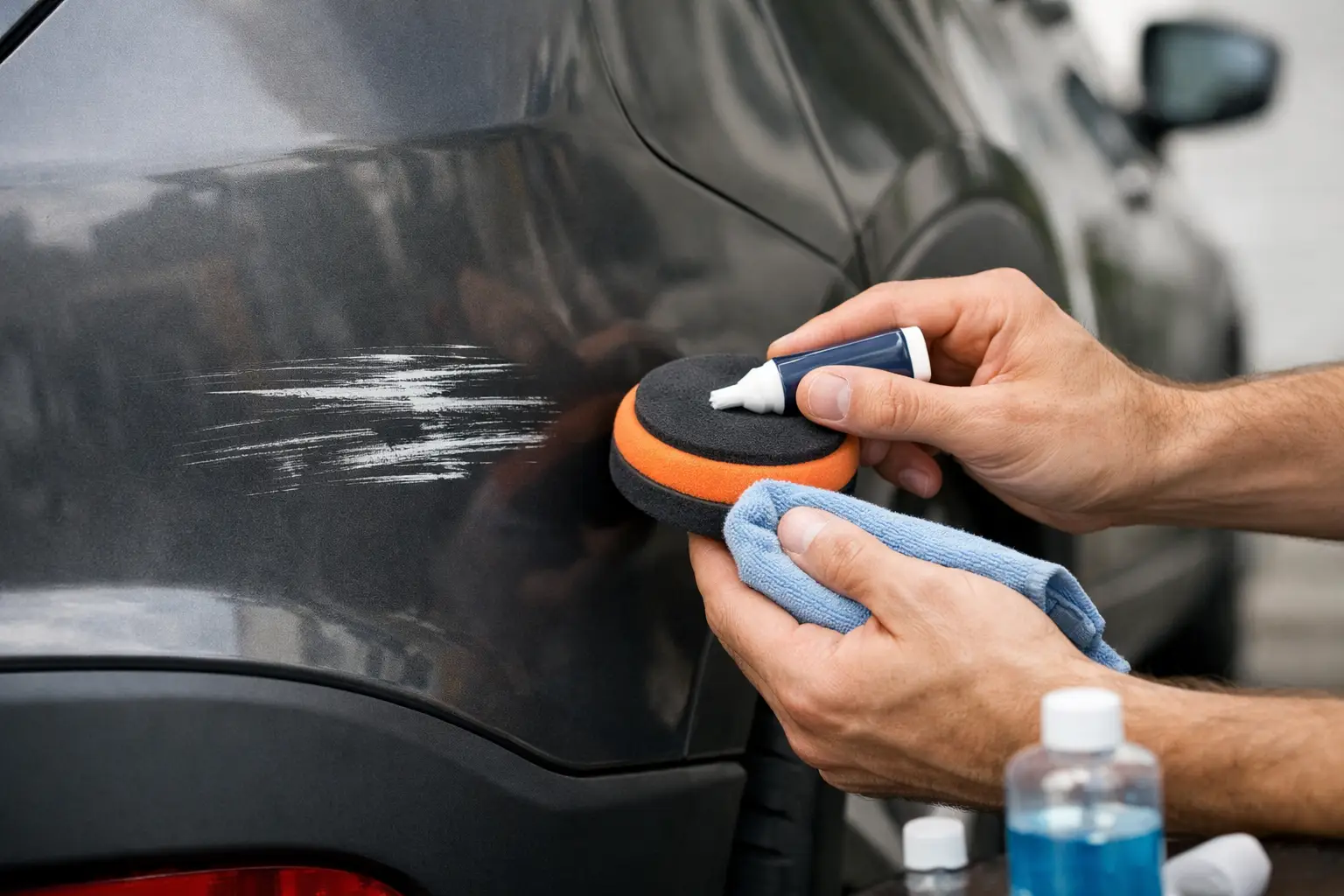
A freshly washed car can look clean, yet still appear flat under Malta’s bright sun. Fine scratches catch the light, paint loses clarity, and water marks can dull even a well-kept finish. The question of car polish versus wax matters because these products serve entirely different purposes: one corrects the paint’s appearance, while the other protects it.
Choosing the wrong treatment can lead to disappointing results. Wax applied over neglected, swirled paint may add temporary shine, but it will not remove the defects beneath it. Polishing paint that only needs protection, on the other hand, can remove more clear coat than necessary. The best result comes from assessing the vehicle’s condition first, then selecting the right level of correction and protection.
Car Polish Versus Wax: The Essential Difference
Car polish is designed to improve the condition of your paintwork. It uses mild abrasives to level tiny imperfections in the clear coat, reducing the appearance of swirl marks, oxidation, light scratches, hazing and dullness. As the surface becomes smoother and more even, light reflects more cleanly. That is where the deep gloss, clarity and refined finish come from.
Wax is a protective layer. It sits on top of the paint to enhance gloss, improve water beading and provide a barrier against environmental contamination. A quality wax can make paint feel remarkably slick and give a vehicle a rich, warm finish, particularly on darker colours. However, it does not permanently remove scratches or correct faded paint.
In simple terms, polish improves the surface. Wax helps preserve it.
That distinction is especially valuable for owners who want more than the brief shine of a routine wash. A premium finish is not created by covering flaws. It is created by correcting what can be corrected, then protecting the improved surface with the right treatment.
What Car Polish Actually Does
Modern vehicle paint is typically finished with a clear coat over the colour layer. Most light defects are found within that clear coat rather than penetrating into the coloured paint itself. Polishing carefully refines this uppermost surface, reducing irregularities that scatter light and make the paint look tired.
A light finishing polish may be enough for a relatively new vehicle with faint wash marks. A more intensive compound may be required where there is visible oxidation, deeper swirling or heavier scratching. This is why professional paint correction is never a one-size-fits-all service. The condition, paint type, age and previous treatment history of the vehicle all influence the approach.
Polish can produce a dramatic transformation, but it is not a protective coating. Once correction work is complete, the freshly refined paint should be protected promptly. Without protection, UV exposure, salt residue, rain, road film and everyday washing can gradually compromise the finish again.
Polishing should also be performed with restraint. Every abrasive polish removes a minute amount of clear coat. In trained hands, this is a measured process guided by paint assessment, suitable pads, machine control and product choice. Repeated aggressive polishing at home, particularly with unsuitable equipment, can create uneven results or reduce the available clear coat unnecessarily.
What Wax Does for Your Vehicle
Wax is valued for the visual richness it brings to paintwork. It boosts depth, leaves a smooth finish and gives water less opportunity to cling to the surface. When rain or wash water beads and rolls away more easily, drying is simpler and the vehicle can stay cleaner for longer.
For cars that already have healthy, glossy paint, wax can be an excellent maintenance choice. It is also a worthwhile finishing layer after polishing, provided the polish residues have been properly removed and the surface prepared.
Its limitation is durability. Traditional wax is not designed to offer the multi-year resilience of a ceramic coating or the physical impact resistance of paint protection film. Exposure to sun, frequent washing, detergents and coastal conditions will wear it down. Depending on the product, how the car is used and how it is maintained, wax protection may last weeks or a few months rather than years.
That does not make wax a lesser option. It makes it the right option for owners who enjoy regular detailing, prefer its distinctive finish or want a refined layer of protection as part of an ongoing maintenance routine.
When Your Car Needs Polish Before Wax
If the paint has lost its crisp reflection, wax alone is unlikely to deliver the result you expect. Look closely at the vehicle in direct sunlight or under a focused inspection light. Spider-web swirls, cloudy patches, faded areas and light scratches are all signs that polishing may be beneficial before any protective product is applied.
A vehicle can also feel rough after washing because bonded contaminants remain on the paint. These may include industrial fallout, tree sap, tar and brake dust. Proper decontamination is often needed before polishing or waxing. Applying protection over contamination can reduce bonding and leave the finish less smooth than it should be.
There is a practical dividing line. If the paint is in good condition and you mainly want shine and protection, waxing may be sufficient. If the paint is visibly marked, oxidised or lacking depth, polishing should come first. Where defects are deep enough to catch a fingernail, even polishing may not remove them completely. A professional detailer will advise whether safe improvement, touch-up work or a more specialised repair is appropriate.
Malta’s Climate Changes the Equation
Paint protection is not merely a cosmetic consideration in Malta. Strong UV exposure can accelerate fading and oxidation, while salt in the air can settle on exterior surfaces. Add dust, road contamination, bird droppings and heat, and untreated paint can lose its lustre far sooner than owners expect.
Wax provides a useful sacrificial layer against these everyday threats, but it needs regular renewal. Polished paint with no subsequent protection is also vulnerable, regardless of how impressive it looks on collection day. For vehicles kept outdoors, driven daily or exposed to coastal conditions, a more durable protection strategy is often a wise investment.
This is where the decision extends beyond car polish versus wax. Paint sealants and ceramic coatings offer longer-lasting chemical resistance and easier maintenance than traditional wax. Paint protection film can provide another level of defence on high-impact areas such as front bumpers, bonnets, mirrors and door edges. The correct option depends on your vehicle, parking arrangements, driving habits and expectations for maintenance.
A Better Order for Lasting Results
The strongest finish follows a considered sequence rather than a quick application of product. Start with a safe wash that avoids adding further swirls. Decontaminate the paint where necessary, assess the condition under proper lighting, and polish only to the level the paint genuinely needs. Protection should then be selected according to the desired appearance, durability and upkeep.
For a cherished weekend car, a carefully applied wax may be the perfect finishing touch. For a daily-driven executive vehicle, a sealant or ceramic coating may deliver better long-term value. For a performance or luxury vehicle with vulnerable front-end paintwork, combining correction with ceramic protection or paint protection film can help preserve both appearance and resale appeal.
Maintenance is equally important. Harsh brushes, strong detergents and neglected bird droppings can shorten the life of any protective layer. Gentle washing methods, clean microfibre towels and timely removal of contaminants will protect the finish between detailing appointments.
Professional Correction Makes the Difference
The difference between a glossy car and a truly refined finish is often visible in the details: crisp reflections, even colour, clean paint around badges and panels, and protection applied to a properly prepared surface. These results require more than a bottle labelled polish or wax.
At GloboWax Malta, paint correction and protection are approached as a precision service. The aim is not to chase unnecessary correction, but to achieve the best safe improvement for the paint before preserving it with a treatment suited to how the vehicle is used.
Your car does not need every product on the shelf. It needs the right treatment, applied at the right time, so every journey begins with paintwork that still reflects the standard you expect.