A cabin can look immaculate and still feel neglected the moment an unwanted smell appears. Tobacco, damp, pet hair, spilled drinks and food residue do more than affect comfort – they change the entire driving experience and can undermine the value of an otherwise well-kept vehicle. A professional car odour removal treatment targets the cause of the smell, not just the air around it, restoring the clean, refined environment your vehicle deserves.
For owners who take pride in their car, a hanging air freshener is not a solution. It may mask an odour for a few days, but it cannot remove the contamination embedded in fabric, foam, carpets or the ventilation system. Proper odour treatment is detailed work, carried out with the same precision used to restore paintwork or protect premium interior surfaces.
Why car odours are harder to remove than they seem
An odour is usually a sign that organic residue, moisture or airborne particles are still present somewhere inside the vehicle. The visible source may have been wiped away long ago, yet microscopic material can remain beneath a seat, within carpet fibres, inside the headlining or through the air-conditioning system.
Malta’s warm climate can make this problem more noticeable. Heat intensifies lingering smells, while humidity can encourage mould and mildew where moisture has settled in upholstery or under floor mats. A car that seems acceptable in the morning may smell far stronger after several hours in the sun.
The challenge is that interiors are built from absorbent materials. Fabric seats, carpet backing, sound-deadening foam and roof linings can hold odours deep below the surface. Even leather interiors are not immune, as spills and residue can collect in stitching, seat rails and the areas beneath the seats.
That is why a quick vacuum, fragrance spray or basic valet rarely delivers a lasting result. It improves the first impression, but it does not always resolve what is creating the smell.
Car odour removal treatment begins with the source
Effective treatment starts with inspection. Before any product is applied, the interior should be assessed for the likely cause, the affected materials and any signs of moisture. This is the difference between specialist detailing and simply covering the problem.
A stale smell may come from old food debris or a drink spill that travelled beneath the carpet. A musty odour can point to wet upholstery, a blocked drainage area, water ingress or a contaminated cabin filter. Tobacco smoke behaves differently again, settling onto glass, trims, fabric and the ventilation system as a sticky film that keeps releasing odour over time.
Pet odours require equally careful attention. Hair can work its way into seams and carpet fibres, while small accidents may reach foam padding beneath the visible upholstery. Treating only the surface leaves the deeper contamination behind, allowing the smell to return when the cabin warms up.
The right process depends on the source. There is no single spray that works equally well for smoke, damp, milk, pet residue and food spills. A premium result comes from matching the cleaning method to the material and the contamination.
What a professional treatment involves
A thorough odour removal service is usually part cleaning, part decontamination and part interior restoration. The objective is not to leave the cabin heavily perfumed. It is to leave it genuinely clean, neutral and pleasant to spend time in.
Deep interior cleaning
The process begins with a detailed vacuum of seats, carpets, mats, boot areas, crevices and seat rails. Loose debris matters because it can be the source of odour in its own right, particularly in family cars, daily drivers and vehicles used for travelling with pets.
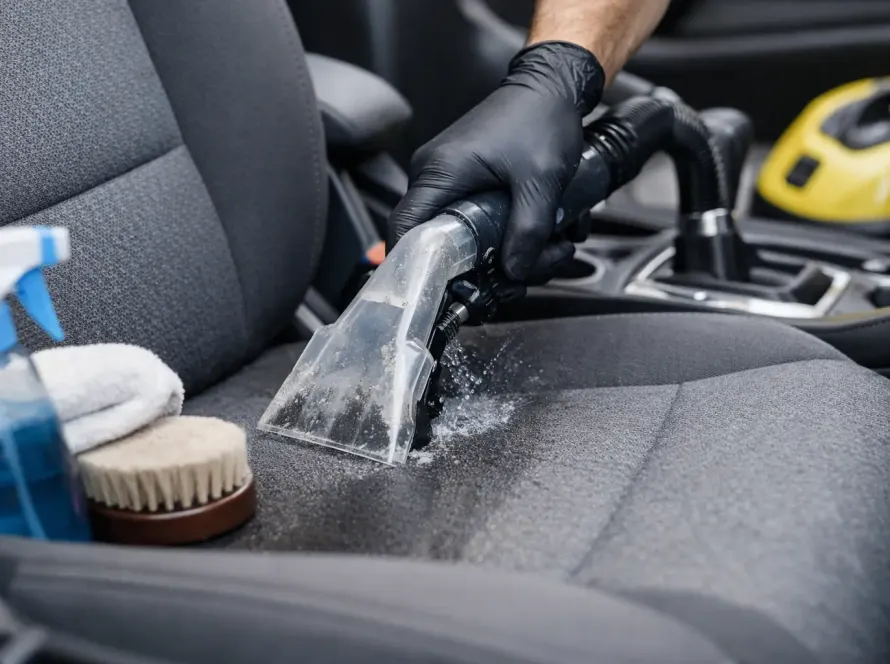
Fabric and carpeted surfaces may then be treated with specialist cleaners designed to break down embedded dirt and organic residue. Depending on the material and level of contamination, controlled extraction can lift residues from below the surface rather than simply wetting the top layer. Drying is equally important. Leaving moisture behind can create the very musty smell the treatment was intended to remove.
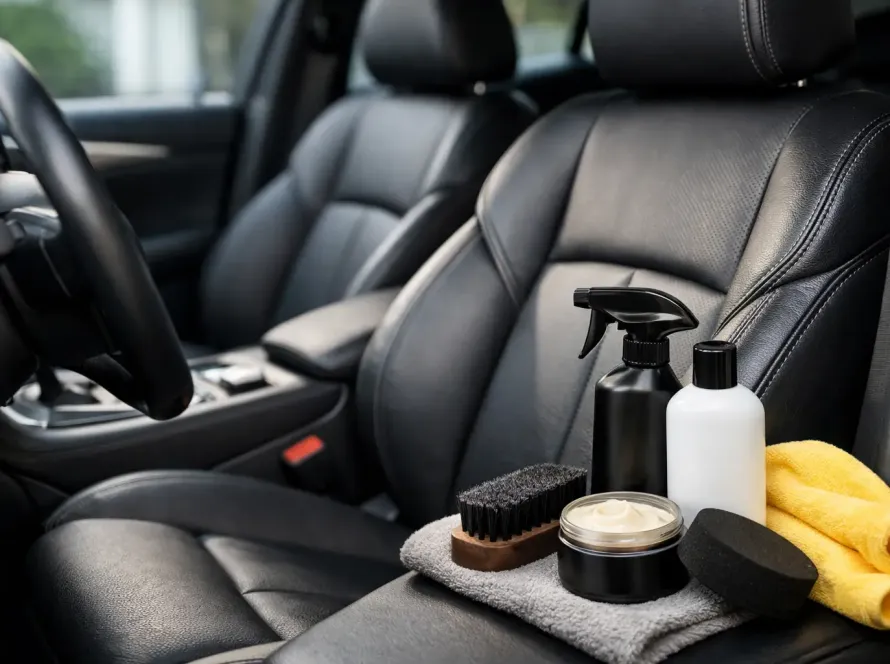
Leather, plastics, door cards and interior trim also need attention. Smoke film, body oils and everyday grime can carry odours and dull the appearance of the cabin. Carefully cleaning and conditioning these surfaces helps restore both freshness and a properly maintained finish.
Targeted odour neutralisation
Once the source has been cleaned, professional neutralising products can address the odour molecules that remain. These are different from perfume-based sprays. Rather than adding a stronger fragrance, they are selected to neutralise specific types of odour without overwhelming the interior.
For persistent cases, advanced treatments may be appropriate after the cabin has been fully cleaned. These treatments should be used with care and only where suitable for the vehicle, its materials and the nature of the contamination. They are an enhancement to a detailed cleaning process, not a replacement for it.
Ventilation system attention
If an unpleasant smell appears when the air conditioning is switched on, the issue may be within the ventilation system. Moisture and bacteria can build up around the evaporator or cabin filter, particularly when the system is used frequently in warm weather.
Cleaning the accessible parts of the system and replacing a dirty cabin filter where necessary can make a significant difference. If the odour points to a mechanical fault, drainage issue or water leak, that underlying problem must be repaired first. Detailing can restore the cabin, but it should not be expected to compensate for an active fault.
When basic cleaning is enough – and when it is not
Not every odour requires the same level of treatment. A light smell from everyday use may be resolved with a careful interior detail, including vacuuming, fabric cleaning and a fresh cabin finish. This is often ideal for vehicles that are regularly maintained and have no history of spills, smoking or moisture ingress.
More intensive work is justified when the smell is persistent, returns after cleaning or affects resale appeal. Tobacco smoke, mould, pet contamination, sour milk and water damage commonly need deeper intervention because the source can extend beyond the visible surface.
A recent spill is also worth addressing quickly. The longer liquid remains in carpet or seat foam, the more likely it is to create staining, bacterial growth and a lasting odour. Early treatment can reduce the amount of dismantling, drying and corrective work needed later.
Protect the result after treatment
A professionally refreshed interior is easier to maintain when it is protected from the causes of future odours. Remove food packaging promptly, clean spills as soon as they happen and avoid leaving wet towels, gym gear or umbrellas inside the car. Where pets travel regularly, use a quality seat cover or boot liner and clean it between trips.
It also helps to run the air conditioning periodically and keep an eye on cabin filter replacement intervals. If you notice damp carpets or misting that seems excessive, investigate early. These details protect not only the smell of the cabin, but also the condition of its materials and electrical components.
For fabric seating, professional seat protection can provide an added layer of defence against accidental spills. It will not make upholstery invincible, but it can give you more time to remove liquid before it sinks into the fibres.
A cleaner cabin changes every journey
The right car odour removal treatment does more than make a vehicle smell better when you first open the door. It restores confidence in the space where you spend your time, protects the impression your car makes on passengers and supports its long-term presentation when it is time to sell.
At GloboWax Malta, interior care is approached with the same commitment to precision, transformation and lasting protection as every detailing service. If a smell has outlasted ordinary cleaning, the answer is not more fragrance. It is a methodical treatment that gives your cabin the clean, composed finish it should have.