Black paint does not hide imperfections. It puts them under a spotlight. Fine wash marring, holograms, random scratches and dull patches that go unnoticed on silver or white paint become immediately visible in direct Maltese sunlight. Professional paint correction results on black car finishes can be dramatic, but the finest outcome comes from understanding what correction can realistically achieve and how that finish will be protected afterwards.
A properly corrected black car has a clarity that is difficult to replicate with wax alone. Light reflects cleanly, body lines look sharper, and the colour gains the deep, liquid appearance owners expect from premium paintwork. The transformation is not a temporary dressing effect. It is the result of carefully removing or refining defects in the clear coat, one controlled polishing stage at a time.
Why black paint reveals every flaw
Black is unforgiving because it provides maximum contrast. Swirl marks scatter light across the surface, creating the familiar spider-web effect seen under the sun, forecourt lighting or a phone torch. Even a careful-looking vehicle can reveal extensive marring once it is washed, decontaminated and inspected under specialist lighting.
Many of these defects are caused by routine maintenance rather than one major incident. Quick automatic washes, dirty wash mitts, harsh drying towels and repeated wiping of dusty paint all leave microscopic marks behind. On a black vehicle, those small marks quickly reduce depth and gloss.
Heat also matters in Malta. Prolonged UV exposure, road dust and mineral deposits can leave paint looking tired or uneven, particularly where a vehicle is parked outdoors. Paint correction cannot change the age of the vehicle, but it can restore a far more refined surface when the clear coat is in suitable condition.
Paint correction results on black car paint: what changes
The most immediate difference is clarity. Before correction, black paint may look grey or hazy despite being freshly washed. After a professional refinement process, reflections become cleaner and the finish appears darker, richer and more deliberate.
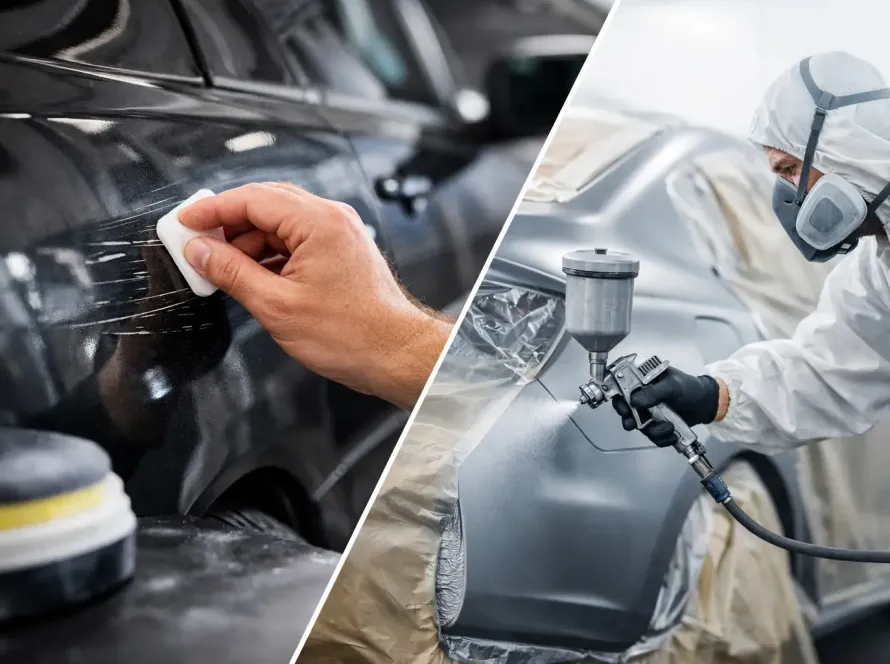
Swirl marks and light wash scratches are often substantially reduced or fully removed. Holograms left by poor machine polishing can also be corrected, replacing uneven reflections with a crisp, uniform finish. This is especially valuable on prestige, performance and executive vehicles, where the condition of the paintwork has a direct effect on how the car is perceived.
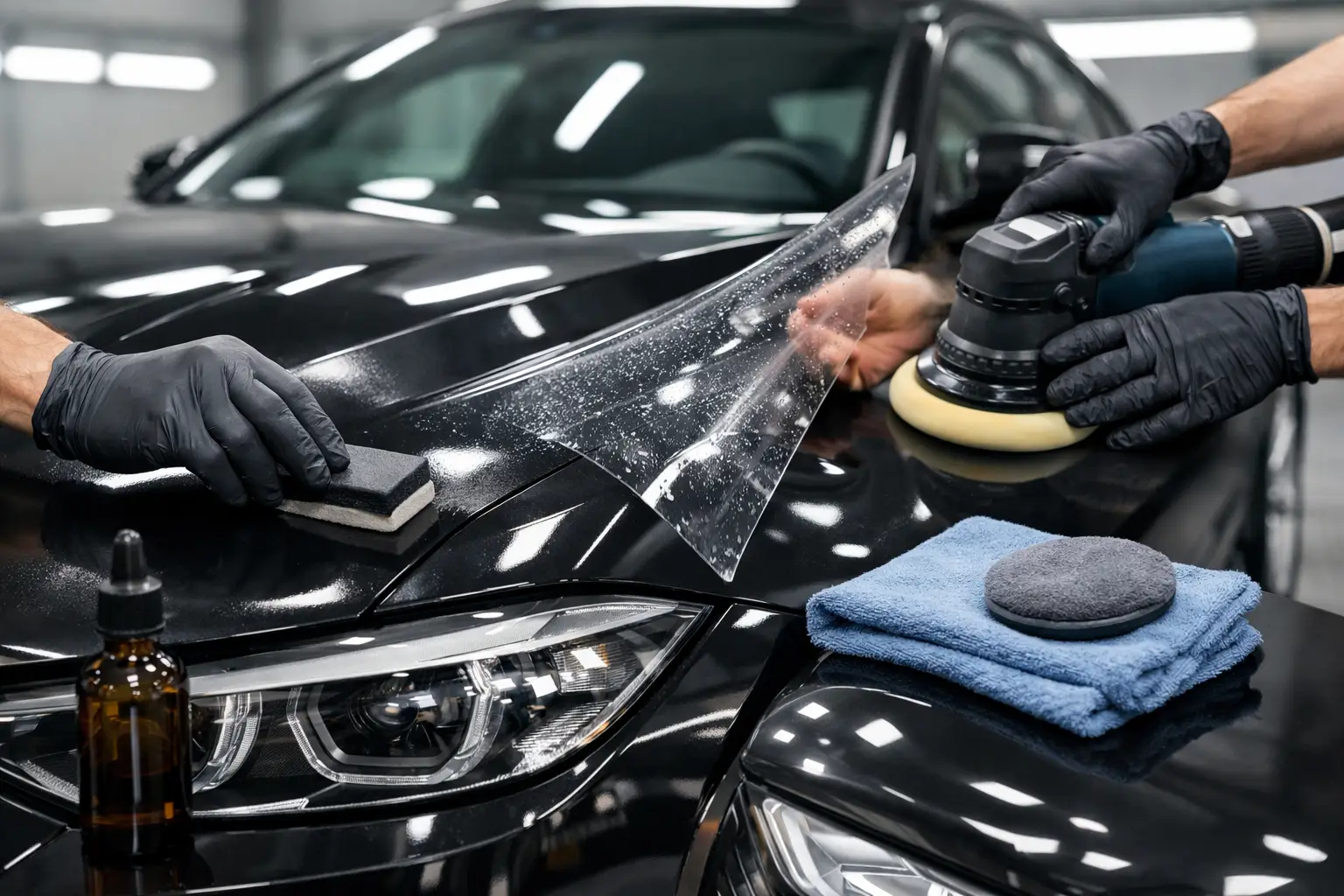
Correction also improves the way protective products perform visually. A ceramic coating, premium wax or sealant applied over hazy paint may add short-term shine, but it will not conceal defects permanently. Applied to a properly corrected surface, protection enhances the gloss already present and helps preserve the result between maintenance washes.
The difference is often most noticeable at certain angles. Under strong sunlight, the panel no longer shows a network of circular marks. Under evening lighting, reflections appear more defined rather than blurred. On a black bonnet or door, that can make the vehicle look years newer without repainting a single panel.
What paint correction cannot promise
Precision means being honest about limits. Not every scratch can be safely removed. If a mark has passed through the clear coat and into the colour coat, polishing cannot make it disappear without removing more material than is responsible. These deeper scratches may be softened visually, but they may still remain visible on close inspection.
Stone chips, lacquer peel, corrosion, cracked paint and poor previous repairs require a different solution. In some cases, localised paintwork is the correct route before polishing can be considered. A reputable detailer will identify these issues during inspection rather than promising an unrealistic 100 per cent correction.
The condition and thickness of the paint also guide the process. Factory paint, repaint work and older panels can all respond differently. The goal is not to remove as much clear coat as possible in pursuit of a number. It is to achieve the strongest safe improvement while preserving paint for the future.
For some cars, a single-stage enhancement is the sensible choice. It can deliver major gloss and a significant reduction in visible defects with less time and paint removal. For heavily marked black paint or a vehicle being prepared for long-term ownership, a multi-stage correction may be justified. The right approach depends on the defects, the paint readings, the owner’s expectations and how the car will be maintained afterwards.
The process behind a flawless-looking finish
Exceptional results begin before the polishing machine is switched on. The vehicle must first be safely washed and chemically decontaminated to remove traffic film, iron fallout, tar and bonded contaminants. Polishing over contamination risks creating more marks, which defeats the purpose of correction.
Each panel is then inspected under controlled lighting. This reveals the true condition of the paint and allows the detailer to choose the correct pad, polish and machine combination. A test area is essential. It shows how that specific paint responds and establishes the safest route to the desired level of correction.
The correction itself is carried out methodically, panel by panel. Depending on the paint, this may involve a cutting stage for deeper defects followed by a refining stage for maximum gloss. Edges, curved panels and delicate trim require particular care, as they cannot be treated in the same way as broad, flat surfaces.
Once the paint has been refined, it is cleansed and prepared for protection. At GloboWax Malta, the focus is on a finish that looks outstanding under real light, not only in a detailing bay. That means checking the paint from multiple angles, removing polishing residues and ensuring the gloss is genuine rather than masked by fillers.
Protection is what keeps the result looking exceptional
Paint correction restores the appearance of the clear coat. Protection helps retain it. Without a protective layer and a careful wash routine, a black car can quickly collect fresh marring and lose the sharpness that made the transformation so striking.
Ceramic coating is a strong option for owners seeking durable gloss, easier cleaning and enhanced resistance to environmental contamination. It does not make paint invincible, and it will not prevent every scratch, but it creates a sacrificial barrier that supports safer maintenance. Paint protection film can be worth considering for high-impact areas such as the front bumper, bonnet edge, mirrors and sills, especially on vehicles regularly used on Malta’s roads.
For vehicles that are garaged, driven less frequently or maintained as weekend cars, a premium wax or sealant may be the right fit. The ideal protection package is not always the most expensive one. It should match how the vehicle is used, stored and washed.
How to maintain corrected black paint
A beautiful black finish depends on what happens after collection. Avoid brushing dust off dry paint, even if the car looks only lightly soiled. That single habit can reintroduce fine marks surprisingly quickly. Use a pH-neutral shampoo, clean wash media and a gentle drying method, ideally with high-quality microfiber towels.
Regular safe washing is better than allowing contamination to build up and then trying to remove it aggressively. Avoid automatic brush washes, dirty sponges and strong all-purpose cleaners on painted panels. If bird droppings, tree sap or insects land on the car, remove them promptly with suitable products and minimal rubbing.
A maintenance detail from time to time can refresh protection, address light surface marks and keep the finish aligned with the standard achieved during correction. Black paint rewards disciplined care: the more carefully it is maintained, the longer it retains that glass-like appearance.
The best paint correction result is not merely a dramatic before-and-after photograph. It is a finish that still looks rich, reflective and protected months later, every time you approach your car.