Leather seats can make a car feel exceptional – until body oils, dust, denim transfer and sun exposure start to dull the finish. If you are wondering how to clean leather seats without drying them out, leaving streaks behind or accelerating wear, the answer is simple: use the right method, the right products and a measured hand. Good leather care is not about scrubbing harder. It is about cleaning with precision, then protecting what gives the interior its refined look in the first place.
Why leather seats need a different approach
Leather is durable, but it is not indestructible. In most modern vehicles, the seats are finished leather rather than raw hide, which means they have a protective surface coating. That coating helps resist staining and makes maintenance easier, but it can still be worn down by harsh chemicals, aggressive brushes and repeated neglect.
This is where many owners go wrong. They treat leather like fabric, soak it with product, scrub at every mark and assume more cleaner means a better result. In reality, too much moisture can creep into seams, while strong all-purpose cleaners can strip the surface and leave the leather looking flat, dry or shiny in the wrong way.
A properly maintained seat should feel clean, supple and matte, not greasy or slick. The goal is to remove contamination while preserving the finish and slowing future wear.
How to clean leather seats step by step
Start by moving the seats as far back and forward as possible so you can access the creases, bolsters and stitching. Leather collects grime in the areas that see the most contact – side bolsters, seat bases, headrests and the top of the backrest. These high-touch zones need extra attention, but never heavy force.
1. Vacuum before you apply anything
Always begin with a careful vacuum. Use a soft brush attachment and work into seams, piping and around seat controls. This matters more than many people realise. If grit and debris stay on the surface, they can act like abrasives once you start wiping.
Take your time here. A rushed vacuum often leaves particles trapped in the creases, which then get dragged across the leather during cleaning.
2. Use a dedicated leather cleaner
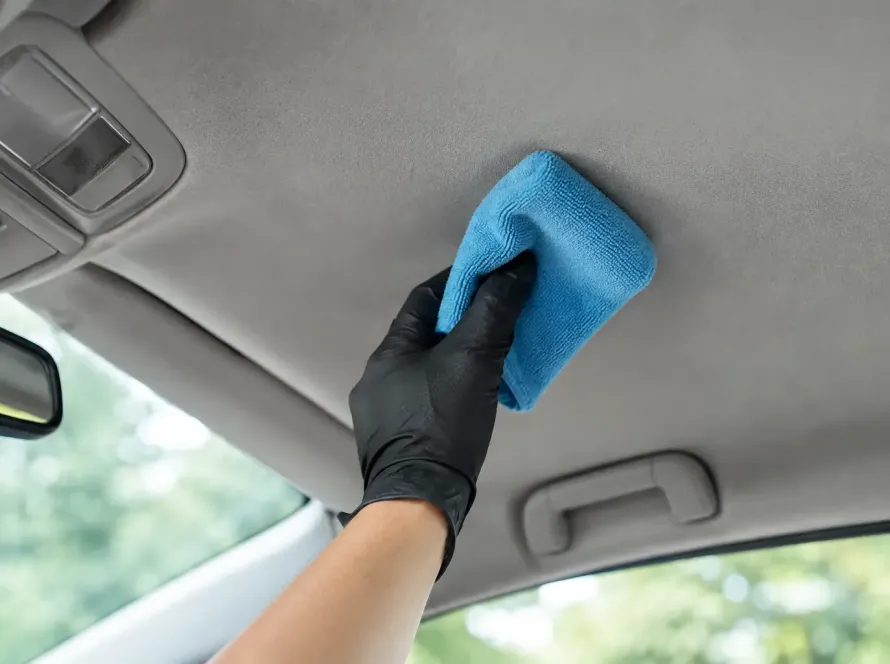
Apply a quality leather cleaner to a microfibre cloth or a soft leather brush rather than spraying the seat heavily. This gives you far more control and reduces the risk of over-wetting the material. Work one section at a time, using light circular motions.
If the seat is only lightly soiled, a cloth may be enough. If there is visible build-up in the grain or along the stitching, a soft brush can help lift embedded dirt. The key word is soft. Stiff bristles may clean faster, but they can also mark the finish.
You will often see the difference immediately. The cloth will lift oils, dust and transferred grime that have been muting the leather’s natural appearance.
3. Wipe away residue properly
After agitating the cleaner, wipe the area with a clean, dry microfibre cloth. Do not leave product sitting on the seat to air dry. That can create residue, uneven patches or a tacky feel.
Change cloth sides regularly. A saturated cloth just moves dirt around, and on pale interiors that can quickly become obvious.
4. Repeat on problem areas, not the whole seat
If there are darker patches on the driver’s bolster or marks from clothing dye, repeat the process on those areas only. There is no benefit in overworking sections that are already clean. Precision always beats excess.
Some staining will lift easily, while some will not. That depends on how long the stain has been there, whether it has penetrated the finish and the type of leather in the vehicle. Patience helps. Aggression rarely does.
What to avoid when cleaning leather seats
Knowing what not to use is just as important as knowing what works. Household cleaners, washing-up liquid, bleach-based products and multi-surface sprays should stay well away from automotive leather. They may look effective in the short term, but they can dry the surface, alter the sheen and compromise protective coatings.
Baby wipes are another common mistake. They seem gentle, but many contain ingredients that are not suited to automotive leather and can leave residues behind. The same applies to bargain dressings that leave a wet, glossy finish. Leather seats should not look artificially shiny. That usually means product build-up, not proper care.
Steam can be useful in trained hands, but it is not automatically safe simply because it is effective elsewhere in the cabin. Too much heat or moisture can create problems, especially around stitching, perforations and delicate finishes.
How to deal with common leather seat problems
Dye transfer
This is especially common on light beige, cream and white interiors. Dark jeans are often the culprit. The sooner you treat dye transfer, the better your chances of removing it fully. Left too long, it can become far more stubborn.
Use a leather-safe cleaner and work gently. If the mark remains after a couple of careful passes, it may need specialist treatment. Over-scrubbing usually makes the finish look worse before it makes the stain look better.
Grease and body oils
Driver’s seats often develop a darker, shinier appearance where skin and hair products come into regular contact with the leather. This is not a sign that the seat is well conditioned. It is usually a build-up of contamination.
A dedicated cleaner and soft brush can lift this effectively, but heavily neglected seats may need repeated work to restore a clean, even finish.
Cracking and dryness
If leather is already cracked, cleaning will improve hygiene and appearance, but it will not reverse physical damage. That is where owners need realistic expectations. Cleaning removes grime. Restoration is a separate process.
Dry, tired-looking leather may benefit from a suitable conditioner after cleaning, but only if the product is designed for automotive use and appropriate for the leather type.
Do leather seats need conditioning?
Sometimes yes, sometimes no. It depends on the age of the vehicle, the leather finish and the condition of the seats. Modern coated leather does not always need frequent conditioning in the way older untreated leather might. In fact, applying heavy conditioners too often can leave residue and attract more dirt.
What leather does benefit from consistently is protection. A proper leather protectant can help reduce friction wear, resist dye transfer and make routine cleaning easier. That matters in daily-driven vehicles, family cars and prestige interiors where preserving the original finish has a direct impact on how the cabin ages.
If you are unsure, it is better to use a specialist leather care product sparingly than to saturate the seat with oils or creams that are not designed for automotive surfaces.
How often should you clean leather seats?
For most vehicles, a light clean every one to three months is a sensible rhythm, with more frequent attention for high-use cars or pale interiors. If the car is parked outdoors regularly in strong sun, leather protection becomes even more valuable.
The biggest mistake is waiting until the seats look obviously dirty. By that point, oils and grime have often built up in the contact areas, and cleaning becomes more labour-intensive. Regular maintenance keeps the leather looking sharper and reduces the risk of long-term wear.
For owners who expect a premium finish from their vehicle at all times, interior detailing should be seen as protective maintenance rather than cosmetic rescue.
When professional leather care is the better option
There is a point where DIY cleaning stops being the best route. Deep staining, neglected interiors, ingrained grime, delicate finishes and high-value vehicles all benefit from specialist handling. Professional detailing is not simply about making seats look cleaner on the day. It is about using safe methods, achieving a more refined result and preserving the interior properly.
This matters even more if the vehicle is a performance car, executive saloon or cherished daily driver where presentation and long-term value go hand in hand. A specialist can assess the leather’s condition, choose the correct products and apply protection that supports durability rather than just temporary appearance.
At GloboWax Malta, interior care is approached with that level of precision – not as a quick wipe-down, but as part of preserving the standard of the whole vehicle.
A cleaner seat is only half the job
If you want leather to keep its premium look, cleaning is the reset, not the finish line. Remove dirt carefully, protect the surface properly and stay ahead of wear before it becomes visible. That is how leather seats continue to feel worthy of the car they are in.