A once-rich paint finish can lose its character long before the vehicle has reached the end of its life. The red that looked vibrant in the showroom turns chalky, black paint becomes grey and flat, and metallic colours lose the depth that gives them presence. Paint correction for oxidised paint is the professional process of restoring as much clarity, gloss and colour richness as the remaining paint safely allows.
Oxidation is not simply dirt sitting on the surface. It is paint that has degraded through exposure, and it calls for a more considered approach than a quick polish or a wax applied over the top. Done correctly, correction can make an ageing vehicle look dramatically sharper while preparing it for proper long-term protection.
What oxidised paint really means
Modern vehicle paint is usually made up of several layers: a primer, a coloured basecoat and a clear coat. The clear coat is the protective layer that provides gloss and shields the colour beneath it. UV exposure, heat, salty air, environmental fallout and inconsistent washing gradually weaken that surface. In Malta, strong sunshine and coastal conditions can accelerate the process, particularly for cars parked outdoors for long periods.
Early oxidation often appears as a lack of gloss. Water may no longer bead cleanly, the paint feels rough after washing, and reflected light looks hazy rather than crisp. As degradation progresses, the finish can become noticeably dull or chalky. On older single-stage paint systems, pigment can transfer onto a cloth during polishing. On clear-coated paint, the concern is whether the clear coat is still healthy enough to correct safely.
That distinction matters. A faded finish is not always a straightforward polishing job, and a professional assessment protects the vehicle from unnecessary risk.
Why washing and wax alone will not restore it
A thorough wash removes traffic film, dust and loose contamination. Chemical decontamination and clay treatment can remove bonded particles that make paint feel coarse. These stages are essential, but neither reverses oxidation within the upper paint surface.
Wax can temporarily deepen the appearance of mildly dull paint, particularly on lighter colours. However, it does not remove the dead, weathered material that scatters light and creates that flat appearance. In some cases, a heavy filler-rich product can disguise defects briefly, only for the dullness to return after a few washes.
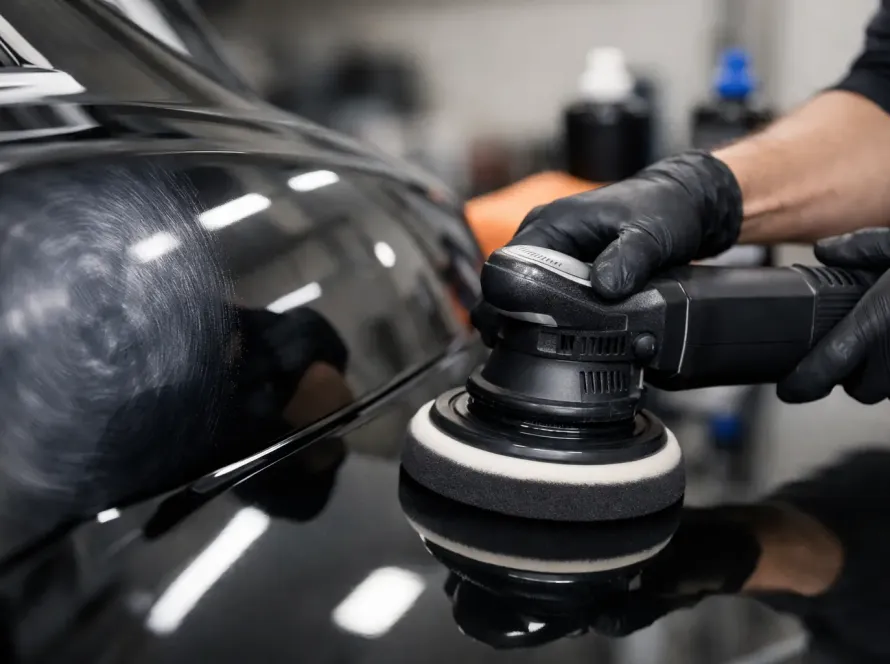
Paint correction works differently. Using carefully selected machine polish, pad combinations and controlled technique, a detailer refines the damaged uppermost layer. The objective is not to chase perfection at any cost. It is to improve the finish substantially while preserving sufficient paint for the vehicle’s future.
Paint correction for oxidised paint: the professional process
Every vehicle begins with inspection. Paint condition can vary across a single car: the bonnet, roof and boot lid usually receive more UV exposure than vertical panels, while a repaired panel may have a different paint thickness or hardness. A professional detailer checks the condition under proper lighting and, where appropriate, uses a paint depth gauge to inform the correction plan.
Preparation creates a clean foundation
Correction should never begin on a dirty vehicle. The paint is safely washed, wheels and lower sections are cleaned, and contaminants such as tar, iron particles and embedded fallout are removed. This avoids dragging abrasive debris across the surface during polishing.
Masking sensitive trims, badges and panel edges is equally important. Edges naturally carry less paint, and textured plastics can be difficult to clean if polish residue is allowed to collect. This preparation is part of the precision that separates specialist detailing from a fast cosmetic polish.
Test spots determine the safest route
There is no single compound or polishing pad that suits every oxidised finish. Paint hardness differs between manufacturers, model years and resprayed panels. The detailer begins with a small test area, usually starting with the least aggressive combination capable of making a meaningful improvement.
The result reveals how the paint responds. If a finishing polish restores clarity, there is no reason to use a heavier cutting compound. If oxidation and deeper wash marks remain, a measured multi-stage approach may be appropriate. This is where experience matters: the best result is not always the most aggressive one, but the one that balances transformation with preservation.
Controlled machine polishing restores clarity
Machine polishing levels microscopic irregularities that diffuse light. As the affected surface is refined, reflections become clearer, the colour appears richer and the paint regains a more even gloss. Swirls, light scratches and water-spot etching may improve at the same time, although their removal depends on depth and the amount of paint available.
The work is checked regularly under inspection lighting, then polishing residue is removed so the true finish can be assessed. A professional correction should reveal genuine clarity, not rely on oils or fillers to create a short-lived shine.
What results can you realistically expect?
Mild to moderate oxidation often responds extremely well. A dull paint finish can regain remarkable gloss and visual depth, especially when followed by a quality protective treatment. Darker colours tend to show the transformation most dramatically, but any colour benefits from cleaner reflections and a more uniform finish.
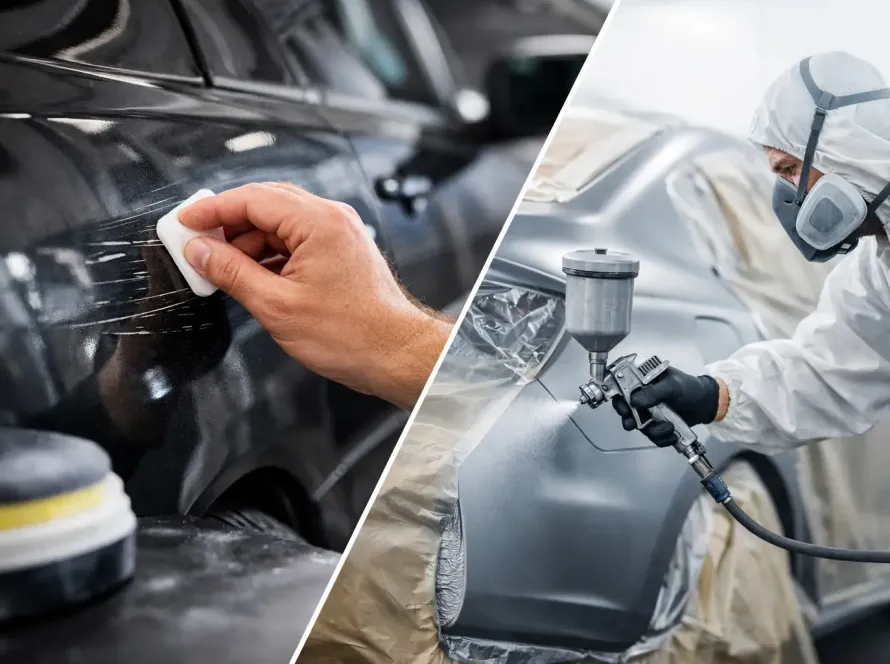
Severe oxidation has limits. If the clear coat has failed – often seen as peeling, flaking or whitish patches that do not improve after cleaning – polishing cannot restore it. The protective layer is no longer intact, and repainting is usually the correct solution. Attempting to compound failed clear coat may worsen the appearance or expose the basecoat beneath.
Deep scratches, stone chips, bird-dropping etching and previous poor repairs may also remain partly visible. Correction can soften their appearance, but it cannot safely remove every defect. Honest professional advice should set that expectation before any work begins.
Protection is the stage that preserves the transformation
Corrected paint is beautifully refined, but it is also bare and needs protection. Without it, UV exposure, fallout and everyday washing can quickly reduce the clarity that has just been restored.
For some vehicles, a premium wax or sealant offers excellent gloss and a practical maintenance routine. For owners seeking longer-term resilience, a ceramic coating provides stronger chemical resistance, easier washing and enhanced water behaviour. It will not make a car immune to scratches or eliminate maintenance, but it can help keep the finish cleaner and more manageable between details.
The right choice depends on how the car is used. A weekend performance car kept under cover has different needs from a daily driver parked outdoors near the coast. The important point is that protection should follow correction, not substitute for it.
How to stop oxidation returning
The most effective maintenance is consistent rather than complicated. Wash the car using pH-neutral products, clean it before contaminants have time to bond, and use clean wash media with safe techniques. Avoid harsh household detergents and automated brushes that can strip protection and introduce fresh marring.
Outdoor parking is sometimes unavoidable, but shade or a quality car cover can reduce prolonged UV exposure. Bird droppings, tree sap and insect residue should be removed promptly, as heat can make these contaminants more damaging. Regular inspections also make it easier to address fading early, when correction is less intensive and more paint can be retained.
A protected vehicle still benefits from maintenance detailing. Coatings and sealants perform best when the surface is periodically cleaned and decontaminated rather than left to carry months of road film and mineral deposits.
When professional correction is the right investment
If your car looks tired after a proper wash, its paint feels rough, or the finish has lost the depth it once had, professional assessment is worthwhile. This is particularly true before selling a vehicle, after purchasing a pre-owned car, or when you want to protect a cherished daily driver or collector vehicle for the years ahead.
GloboWax Malta approaches paint correction as a preservation service, not a quick shine service. The goal is a refined, showroom-quality appearance achieved through careful inspection, controlled polishing and protection chosen for the vehicle’s real conditions.
The best time to address oxidation is before it becomes paint failure. Give the finish the attention it needs now, then protect it well enough that every future wash reveals the same depth, gloss and pride of ownership.