A clean cabin can still feel neglected when the fabric above your head is marked, yellowed or carrying a faint odour. The headliner is one of the most visible surfaces in a vehicle, yet it is also one of the easiest to damage. Effective car headliner cleaning is not about soaking the material until it looks brighter. It is about lifting contamination while protecting the adhesive, fabric and shape of the roof lining.
For owners who expect a showroom-standard interior, this is a detail that deserves more care than a quick wipe at a car wash. A poorly cleaned headliner can develop water rings, loose edges or sagging fabric – problems that cost far more to correct than the original stain.
Why headliners need a different approach
Most vehicle headliners are made from a thin fabric bonded to a foam backing, which is then fixed to a rigid board. Heat, age and moisture gradually weaken the adhesive between these layers. In Malta’s strong sun, that ageing process can accelerate, particularly in vehicles that spend long periods parked outdoors.
This construction is why the usual interior-cleaning instincts can cause trouble. Saturating the surface with water, scrubbing aggressively or using a heavy carpet-cleaning machine can force moisture through the fabric and into the foam. The adhesive may soften, the backing can distort, and the fabric may begin to separate. What starts as a small coffee splash can become a sagging roof lining.
The right method depends on the material, the age of the vehicle, the nature of the stain and whether the lining already shows signs of weakness. A newer, firmly bonded headliner may tolerate careful spot treatment. An older lining with loose corners needs a far more restrained approach.
Car headliner cleaning starts with diagnosis
Before any product touches the fabric, inspect the headliner in good natural light. Look for the difference between a localised mark and a broader discolouration. Local stains from fingerprints, makeup, drink splashes or a leaking sunroof can often be treated selectively. Widespread yellowing, nicotine residue or water staining may point to a larger issue that needs to be addressed before cleaning begins.
A water mark, for example, may be cosmetic, but it can also indicate a blocked sunroof drain, damaged door seal or windscreen leak. Cleaning the evidence without resolving the source invites the same problem back into the cabin.
Check the edges around grab handles, sun visors, interior lights and the top of the pillars. If the material is lifting, rippled or soft to the touch, do not attempt a wet clean. The fabric may already be close to failing, and a specialist inspection is the sensible next step.
The safest method for light marks and dust
For light surface dust, begin with a clean, soft detailing brush or a vacuum fitted with a soft brush attachment. Work gently in one direction rather than pressing the tool into the fabric. The goal is to remove loose debris without roughening the fibres.
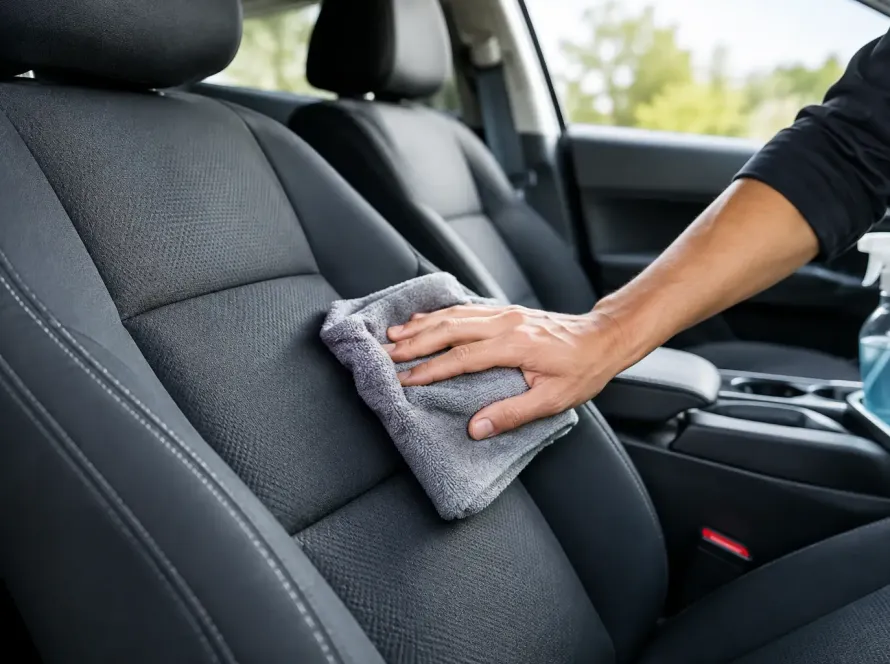
For a small fresh mark, use a dedicated interior fabric cleaner sparingly. Spray the product onto a clean microfibre cloth or soft brush, not directly onto the headliner. This gives you control over moisture and prevents overspray from settling across a wider area.
Blot and lightly agitate the affected spot with minimal pressure. Avoid circular scrubbing, which can leave a visible texture change or spread the stain beyond its original outline. Follow with a dry microfibre cloth to absorb residue, then allow the area to air dry with the doors open where possible.
Patience matters here. Repeating a gentle treatment after the surface has dried is safer than attempting to remove a stubborn mark in one wet, forceful pass.
Test before treating the visible area
Even quality cleaning products can alter the appearance of delicate fabrics. Test your chosen cleaner on a discreet section near the edge of the headliner first. Check for dye transfer, lightening, texture change or adhesive softening once it has dried.
This small precaution is particularly valuable on older cars, premium interiors with lighter fabrics, and vehicles that have previously been cleaned with unknown products. A headliner can look fine while wet, then reveal a tide mark as it dries.
What to avoid when cleaning a car headliner
The biggest risk is over-wetting. Steam cleaners, wet extraction machines and heavily soaked cloths may be suitable for carpets or seats, but they are rarely the right choice for a bonded roof lining. Heat and moisture can work against the very adhesive holding the headliner together.
Household cleaners are another common mistake. Bleach, strong degreasers, washing-up liquid and high-alcohol solutions can leave residue, fade fabric or make the surface feel stiff. Air fresheners and fragranced sprays may cover an odour briefly, but they do not remove the contamination causing it.
Avoid pressing hard around the edges, too. The perimeter of the lining is often where age-related adhesive failure first becomes visible. If you notice a loose section, do not try to push it back into place with cleaner or glue from a DIY kit. Professional retrimming or headliner repair may be required to achieve a tidy, lasting result.
Removing common headliner stains
Fingerprints and light grease marks are usually the most manageable. A low-moisture fabric cleaner and gentle blotting can lift them, especially when treated early. Makeup, suncream and hair products can be more challenging because they contain oils and pigments. These stains often need a purpose-made interior cleaner selected for the material, used in controlled amounts.
Drink stains should be attended to promptly. Blot first to remove as much residue as possible, then treat only the affected area. If the spill contains sugar, milk or coffee, leaving residue behind can later create an odour or attract further dirt.
Nicotine staining is different. It is rarely confined to one area, and the yellow cast often sits across the headliner, pillars and other interior trim. Attempting to brighten just one patch can leave an uneven finish. In these cases, professional interior detailing offers a more considered route, with the cleaning approach matched to the material’s condition.
Persistent smells also require diagnosis. Mustiness can indicate moisture in the cabin, while smoke odour can settle into fabric, ventilation pathways and soft trim. Treating the headliner alone may improve the cabin, but it will not necessarily solve the cause.
When professional detailing is the better investment
There is a point where DIY car headliner cleaning stops being economical. If the stain is large, old, oily, caused by a leak, or close to a loose edge, professional care reduces the risk of permanent damage. The same applies where a high-value vehicle has a delicate light-coloured interior or where presentation matters for resale.
A specialist detailer works with controlled product application, suitable agitation tools and a clear understanding of where moisture can become a problem. More importantly, the work is carried out as part of the cabin rather than in isolation. The pillars, visors, roof controls, upholstery and glass can all influence how clean the finished interior looks.
At GloboWax Malta, interior detailing is approached with that same precision: restore the visible finish, respect the materials beneath it, and avoid creating a new problem while solving an old one. It is the difference between simply making a stain less obvious and preserving the quality of the cabin for the miles ahead.
Keeping the headliner looking its best
Prevention is mostly about reducing the contamination that reaches the fabric. Clean hands before entering the car, especially after applying suncream or handling food. Take care when loading bags or sports equipment, as a raised object can scuff the lining before you notice it.
If you smoke in the vehicle, be aware that the headliner is one of the first places residue will settle. Regular interior maintenance will help, but preventing smoke exposure remains the most effective protection. Address leaks quickly, keep sunroof drains maintained, and do not leave damp items in the cabin after rain or a day at the beach.
The best headliner care is almost invisible: light, measured maintenance that preserves the factory fit and finish. When a mark demands more than that, choosing a controlled professional treatment protects both the interior’s appearance and the vehicle’s long-term value.