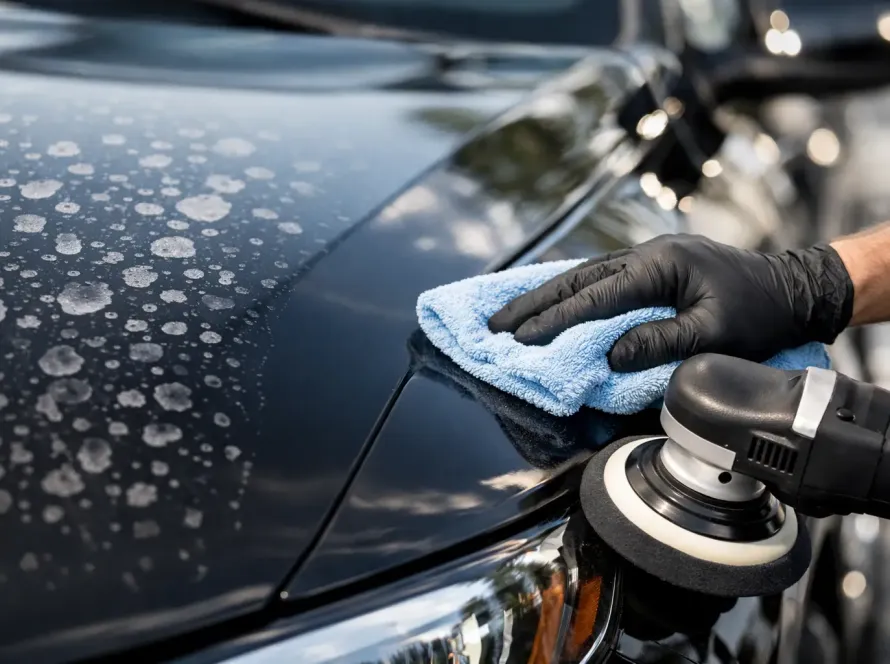
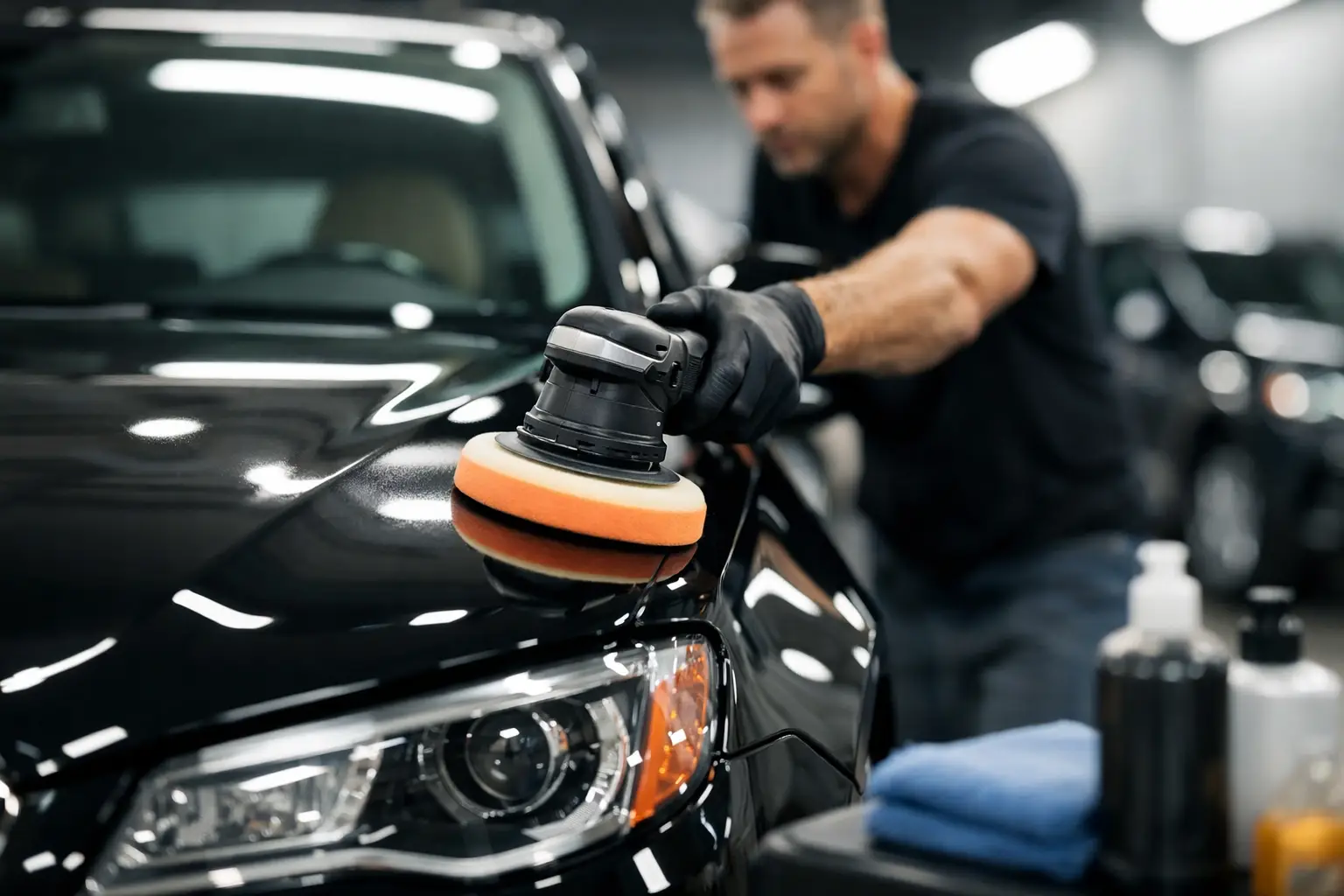
A freshly washed car can look clean, but it will not necessarily look protected. Car waxing is the step that gives paint its richer depth, sharper reflections and sacrificial barrier against the conditions that slowly dull a vehicle’s finish. In Malta, where intense sun, airborne salt and road contamination are part of everyday driving, that protection is not merely cosmetic.
A quality wax treatment enhances the character of the paintwork. Metallic finishes appear more defined, dark colours gain a deeper wet-look gloss, and lighter paint looks cleaner and more refined. More importantly, wax helps preserve the finish underneath, so your vehicle continues to reflect the standards you expect from it.
What car waxing actually does
Car wax is applied over clean, prepared paintwork to form a protective layer. This layer sits above the clear coat and takes the first impact from environmental contamination. It helps water bead and run away more easily, reducing the time moisture and grime remain in contact with the surface.
The visible result is immediate: improved gloss, greater colour clarity and a smoother finish. The practical result matters just as much. Dust, light dirt and insect residue are easier to remove during future washes, while the paint receives an added level of defence from UV exposure and everyday pollutants.
Wax is not a permanent coating, and it should not be presented as one. Its durability depends on the product used, how the vehicle is stored, wash habits and the condition of the paint beneath it. However, correctly applied professional wax remains one of the most effective ways to maintain an exceptional finish between more intensive protection treatments.
Why wax matters in Malta
Malta’s climate is demanding on vehicle paint. Strong sunlight can gradually leave unprotected paint looking flat, particularly on bonnets, roofs and upper panels. Coastal air carries salt, while dust, construction debris, bird droppings and traffic film can settle quickly on a car that is used every day.
These contaminants do not all cause immediate visible damage, but neglect allows them to build up. Over time, paint can lose its slickness, gloss and visual depth. A waxed surface gives contamination less opportunity to bond tightly to the paint and makes careful maintenance more straightforward.
For a daily driver parked outdoors, regular waxing is a sensible part of long-term care. For a prestige, performance or cherished weekend vehicle, it is equally valuable because it maintains the finish that makes the car feel special every time it is seen in the sunlight.
Preparation determines the finish
The quality of a car waxing service is decided long before the wax is applied. Wax will enhance a prepared surface, but it cannot correct swirls, scratches, oxidation or bonded contamination. Applying it over neglected paint can add temporary shine while leaving the underlying defects clearly visible.
Professional preparation begins with a safe wash that removes loose dirt without inflicting further marks. The paint is then assessed and decontaminated where necessary to remove embedded particles that washing alone cannot shift. This creates a clean, smooth foundation for protection.
If the paint has fine scratches, holograms or a dull appearance, polishing or paint correction may be the better first step. Correcting the surface before waxing allows the protection to lock in genuine clarity rather than simply glossing over imperfections. It is the difference between a car that looks freshly valeted and one that looks meticulously refined.
Waxing versus polishing
These services are often grouped together, but they serve different purposes. Polishing improves the paint by reducing surface defects and restoring clarity. Waxing protects and enhances the finish after the preparation work is complete.
A vehicle with healthy, well-maintained paint may only need a careful wash, decontamination and wax application. A vehicle with visible swirls or fading will benefit more from correction first. The right approach depends on paint condition, ownership expectations and how long you want the result to last.
Choosing wax, sealant or ceramic protection
Wax remains popular because it delivers a warm, rich appearance, particularly on deep solid colours and metallic paint. It is an excellent maintenance treatment for owners who appreciate frequent professional care and enjoy keeping their vehicle at its visual best.
For drivers seeking longer intervals between protection services, a synthetic sealant may offer extended durability with a crisp, high-gloss finish. Ceramic coating is a more advanced option, designed for longer-term chemical resistance, hydrophobic performance and easier maintenance. Paint protection film serves a different role again, offering physical defence against stone chips and abrasion in vulnerable areas.
There is no single treatment that suits every vehicle. A well-kept car used occasionally may be perfectly served by regular professional waxing. A heavily used vehicle, a new car intended for long-term ownership or a car exposed to frequent motorway travel may justify ceramic coating or paint protection film. The best choice is based on use, storage, paint condition and the level of maintenance you are prepared to maintain.
How often should a car be waxed?
For most vehicles, a professional waxing schedule every three to six months keeps the paint looking consistently protected and glossy. Cars kept outdoors, driven daily or exposed to coastal conditions may need attention more frequently. Covered, lightly used vehicles can often go longer, provided they are washed correctly and contamination is removed promptly.
The surface itself provides useful clues. If water no longer beads or sheets cleanly, the paint feels rough after washing, or the finish has lost its crisp reflections, the protection may be fading. Do not wait until the paint looks neglected. Preventive care is always more efficient than restorative work.
It also matters how the car is washed between appointments. Harsh detergents, abrasive sponges and automatic brush washes can shorten the life of wax and introduce fine scratches. A pH-balanced shampoo, soft wash media and careful drying preserve both protection and gloss.
The professional difference
Applying wax may sound straightforward, but premium results come from judgement and control. Different paint types, colours and conditions respond differently to preparation and product choice. Excess product, rushed removal or application on an unprepared surface can leave smearing, uneven gloss and disappointing durability.
A professional detailer works methodically: assessing the paint, selecting the correct preparation method and applying protection evenly across the vehicle. Attention is also given to areas that are easily missed, including intricate body lines, lower panels and paint around badges and trim.
At GloboWax Malta, car care is approached as preservation as much as presentation. The goal is not simply to make a vehicle shine for collection day, but to protect the surfaces that support its long-term appearance and value.
Keeping the finish looking its best
After waxing, simple habits make a noticeable difference. Wash contamination away before it has time to bake onto warm paint, remove bird droppings promptly, and avoid wiping dry dust across the bodywork. If the vehicle is parked outdoors, a regular maintenance plan is far more effective than occasional reactive detailing.
Your paintwork is one of the largest visible surfaces on your vehicle. Treat it with the same care you would give the cabin, wheels or mechanicals, and the reward is clear every time the light catches the bodywork: deeper colour, cleaner reflections and protection that continues working long after the appointment ends.