A clean fabric interior can make even a well-driven car feel exceptionally well kept. Yet daily commutes, school runs, beach days, pets and takeaway coffees can leave marks that ordinary vacuuming will not remove. The best fabric seat protectors create a practical barrier between your upholstery and real life, helping preserve the fresh, cared-for appearance that supports both your driving experience and your vehicle’s long-term value.
The right choice is not simply the thickest cover on the shelf. It must fit properly, remain stable when the vehicle is in motion and work with the seat’s safety systems. For owners who expect more from their vehicle care, that detail matters.
What Makes the Best Fabric Seat Protectors?
A seat protector should protect without making the cabin feel like a compromise. Premium fabric upholstery is designed for comfort, breathability and visual appeal, so a loose, shiny or poorly shaped cover can quickly undermine the interior you are trying to preserve.
Start with fit. A tailored protector follows the shape of the seat base, backrest and headrest, reducing movement when you enter, exit or adjust your position. Universal covers can be useful for temporary protection, particularly in work vehicles or when transporting pets, but they often bunch at the edges. Those folds trap grit and can create unnecessary abrasion over time.
Material is equally important. Water-resistant polyester blends are usually the most practical option for busy daily drivers because they repel spills and dry quickly. Neoprene-style materials provide stronger water resistance and a more substantial feel, although they can retain heat in Malta’s warmer months. Quilted, padded protectors offer a premium look and additional cushioning, but they are not always fully waterproof. The best material depends on what your seats face most often.
A quality protector also needs a non-slip backing and secure anchor points. These details stop the cover sliding under braking or while passengers move around. Protection only works when it stays where it is meant to be.
Match Seat Protection to How You Use Your Car
There is no single best option for every owner. The ideal fabric seat protector reflects the job your car performs each week.
For family cars, choose a protector that covers the full rear bench and includes a waterproof membrane. Children’s drinks, muddy shoes and crumbs tend to reach the gaps between cushions, so look for designs with seat crevice anchors and side flaps. Machine-washable construction is useful, but do check the manufacturer’s washing guidance. Repeated hot washes can affect waterproof coatings and elastic straps.
For pet owners, a hammock-style rear-seat protector can be highly effective. It protects the seat base, backrest and footwell while reducing the chance of a dog falling forward during a sudden stop. Look for a textured, non-slip surface and reinforced stitching around attachment points. If your dog regularly travels in the car, remove the protector periodically and vacuum underneath it. Fine sand, hair and grit can still work their way beneath any cover.
For tradespeople, gym-goers and outdoor enthusiasts, heavy-duty waterproof covers are usually the sensible choice. They are less concerned with maintaining the original cabin design and more focused on resisting mud, damp clothing and equipment. Select a darker colour with a finish that can be wiped clean between deeper washes.
If you own a premium, performance or executive vehicle, a tailored seat protector is generally the stronger option. It should complement the interior rather than conceal it completely. Consider using it strategically for holidays, garage visits, child-seat use or occasions when the vehicle will carry pets, then remove it for everyday driving. This keeps the cabin looking considered while limiting avoidable wear.
Safety Comes Before Convenience
The best fabric seat protectors must never interfere with your vehicle’s safety equipment. Modern seats may contain side airbags, occupancy sensors, seatbelt guides, ISOFIX access points and electric adjustment controls. A cover that blocks or restricts any of these features is not acceptable.
Before fitting a protector, identify whether your vehicle has seat-mounted airbags. If it does, choose a product specifically designed and clearly labelled as compatible with side airbags for your vehicle type. Never cut openings into a standard cover yourself. An improvised modification may affect how the material tears away in an airbag deployment.
Also check that the seatbelt buckles remain easy to reach and that ISOFIX points are fully accessible if you use a child seat. Thick protectors beneath a child seat can alter its stability, so follow the child-seat and vehicle manufacturer’s guidance before using one. In some cases, a slim fitted mat designed specifically for child-seat protection is the better solution.
Avoid covers that sit over integrated headrests, obscure adjustment levers or obstruct heated-seat controls. A protector should make ownership easier, not introduce a new set of problems every time you get behind the wheel.
Waterproof Does Not Mean Maintenance-Free
Even excellent seat covers require regular care. Dirt caught between the protector and the upholstery can act like fine sandpaper, especially on long journeys. Remove the covers often enough to inspect the original fabric, vacuum the seat seams and wipe down any hard plastic areas around the seat base.
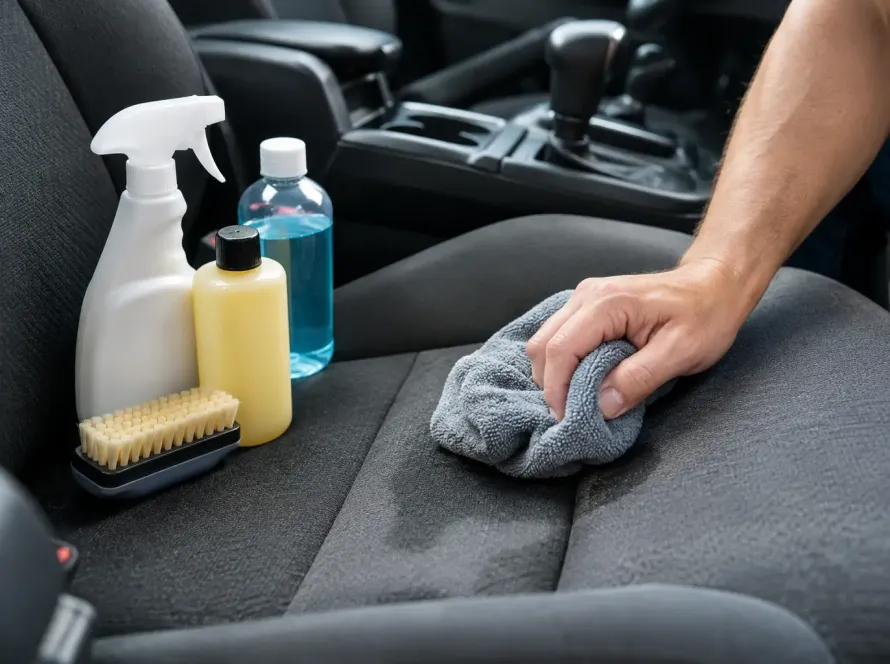
For light soiling, vacuum first and use a soft brush to lift dry mud or pet hair. Clean spills promptly with a suitable fabric-safe cleaner rather than saturating the protector with water. Excess moisture can pass through stitching, linger beneath the cover and leave an unpleasant odour in the cabin.
When washing is required, follow the care label precisely. Harsh detergents, bleach and high drying temperatures can weaken waterproof backings, fade colour and reduce the life of the straps. Air drying is usually the safest route. Ensure the cover is completely dry before reinstalling it, particularly during humid weather.
It is worth remembering that seat protectors prevent much of the damage, but they cannot correct old staining, embedded grime or lingering odours already present in the fabric. In those cases, professional interior detailing can restore the material before you place it under ongoing protection.
Fabric Seat Protectors Versus Fabric Protection Treatments
A removable cover and a professional fabric protection treatment solve related but different problems. A seat protector provides a physical barrier. It is excellent for high-risk use, such as muddy pets, young children or regular transport of work equipment. Its trade-off is that it changes the look and feel of the seating surface.
Fabric protection treatments are applied directly to clean upholstery. They help liquids bead on the surface and give you more time to blot a spill before it penetrates the fibres. The original texture, colour and shape of the seat remain visible. This makes treatment an especially attractive choice for owners who want to preserve a refined factory interior without covering it.
For many vehicles, the strongest approach is both. A professional fabric protection treatment helps defend the upholstery during daily use, while a tailored removable protector is fitted for the occasions that create the greatest risk. This layered approach is particularly valuable for light-coloured interiors, where even small marks can stand out.
At GloboWax Malta, interior protection is approached as part of the whole vehicle, not as an afterthought. Proper preparation matters. Fabric should be thoroughly cleaned and dried before a protective treatment is applied, otherwise dirt and stains can be sealed beneath the surface.
A Better Buying Checklist
When comparing products, focus on the details that affect real-world performance rather than relying on marketing claims alone. Check whether the cover is vehicle-specific or universal, whether it is compatible with side airbags, and whether all seatbelt and ISOFIX points remain accessible. Review the backing material, fastening method and washing instructions before purchasing.
Pay attention to coverage too. A rear bench protector may cover the central seating area but leave seat sides and door-side bolsters exposed. That may be perfectly adequate for occasional use, but not for a vehicle that regularly carries wet dogs or children. Front-seat protectors should cover the outer bolster, as this is one of the areas that receives the most friction when entering and leaving the car.
Colour is a practical decision. Black, charcoal and dark grey hide marks well, but light interiors can show lint transferred from dark covers. If presentation is a priority, choose a neutral, tailored finish that sits neatly against your cabin trim.
Your interior is one of the few parts of the car you experience on every journey. Choose protection that respects that space, keep it clean beneath the cover, and act quickly when spills or stains occur. Those small standards keep fabric seats looking composed long after the first showroom drive.