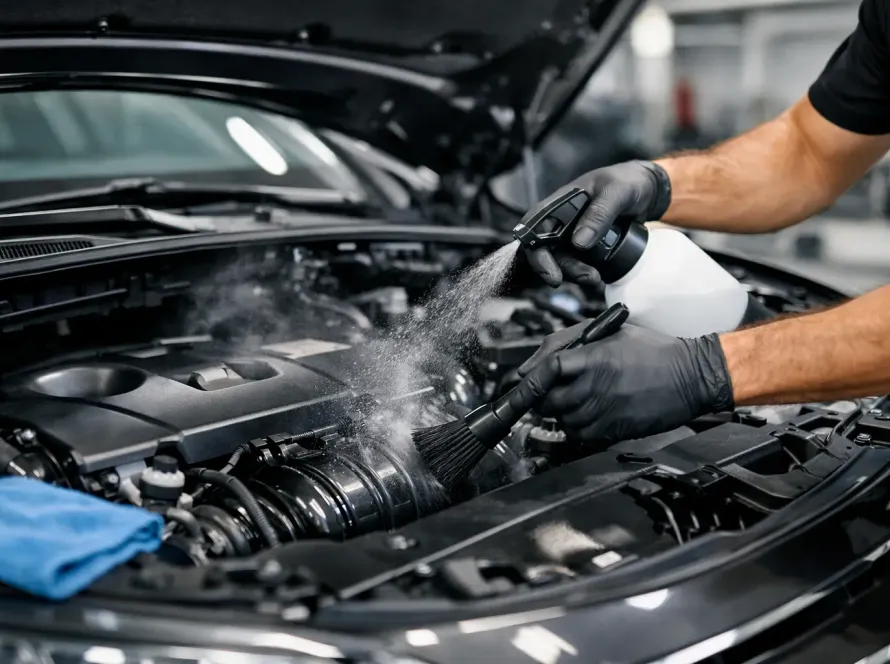
A clean engine bay changes the way a vehicle feels before the key is even turned. Lift the bonnet and you should see cared-for components, not baked-on dust, oil residue and brittle-looking plastics. The real engine bay detailing benefits go well beyond presentation: specialist cleaning can make routine checks easier, help identify emerging issues and preserve the finishes that live under one of the harshest areas of your car.
For owners who take pride in their vehicle, engine bay detailing is not a cosmetic extra reserved for a sale day or a car show. It is a considered part of high-standard vehicle care. Done correctly, it restores order beneath the bonnet without exposing sensitive electrical connections, hoses or trim to unnecessary risk.
1. A cleaner bay makes faults easier to spot
Engines naturally collect dirt. Road dust enters through gaps around the bonnet, moisture settles after rain, and small traces of oil or coolant can attract grime until an otherwise tidy bay looks neglected. Once every surface is coated, it becomes harder to tell the difference between old residue and a fresh problem.
A professionally detailed engine bay gives you a clearer baseline. If a new fluid mark appears around a hose, reservoir, gasket or cap, it is far more likely to be noticed early. The same applies to ageing clamps, cracked vacuum lines and worn insulation. Detailing does not replace mechanical servicing, but it supports more informed inspections by making what is there visible.
This matters particularly in Malta, where heat, dust and strong sun can accelerate the tired appearance of under-bonnet plastics and rubber components. A cleaner environment helps owners and technicians see the true condition of the bay rather than guessing through layers of contamination.
2. It protects the finishes under the bonnet
Not every engine bay is bare metal and mechanical hardware. Modern vehicles contain painted panels, plastic covers, rubber seals, aluminium parts and carefully routed wiring. Each material reacts differently to heat, contamination and harsh chemicals.
Quality engine bay detailing uses appropriate cleaners, controlled agitation and safe drying methods rather than indiscriminate pressure washing. The aim is to remove grime without forcing water into areas where it does not belong or stripping protective finishes from delicate surfaces. Once cleaned, suitable dressings can restore a natural, refined finish to plastics and rubber without leaving an artificial greasy shine.
That distinction is important. A glossy engine bay may look impressive for a photograph, but excessive dressing can attract dust and create a slippery residue. A premium result should look clean, even and factory-fresh, with surfaces properly conditioned rather than coated for effect.
3. Engine bay detailing benefits resale presentation
Buyers notice the details that suggest how a car has been treated. A polished exterior and fresh interior make a strong first impression, but a neglected engine bay can quickly undermine it. It can raise questions about maintenance, leaks or the level of care given to the vehicle over time.
A clean bay cannot disguise a mechanical fault, nor should it. What it can do is present the vehicle honestly and professionally. Clean components, tidy trim and readable labels communicate pride of ownership. For premium, performance and enthusiast vehicles in particular, this level of presentation can make the overall condition feel more convincing.
If you are preparing a car for sale, engine bay detailing works best as part of a broader presentation programme that may include paint correction, interior detailing, headlight restoration and paint protection. The result is a vehicle that looks consistently cared for from every angle, not just at a glance.
4. It supports safer, more confident maintenance checks
Opening the bonnet to check oil, coolant or washer fluid should not mean brushing against layers of dust and unknown residue. A clean working area makes basic owner maintenance more pleasant and can reduce the chance of dirt being transferred around filler caps and reservoirs.
It also makes labels, fluid-level markings and coloured caps easier to find. On some vehicles, these details are already tucked beneath covers and tight packaging. When the bay is clean, a routine check is quicker and less frustrating.
There is a sensible limit here. Engine bay detailing is not a reason to interfere with components that should be handled by a qualified technician. Modern hybrid and electric vehicles, for example, have high-voltage systems and specific manufacturer procedures. Any cleaning process must be adapted to the vehicle, with sensitive areas protected and the correct products chosen from the start.
5. It removes grime before it becomes stubborn
Fresh dust is simple to remove. Heat-cycled oil mist, mineral deposits and traffic film are not. Left for long periods, contamination can bond to plastic covers, painted inner wings and metal parts, making later cleaning more difficult and less predictable.
Regular attention prevents that build-up from becoming the normal state of the bay. This is especially useful for cars driven frequently, vehicles parked outdoors, and cars used near construction areas or dusty roads. Owners of cherished weekend cars also benefit, as long periods of storage can allow dust, moisture and residue to settle unnoticed.
The right frequency depends on use. A daily driver may benefit from an annual professional engine bay detail, while a car exposed to heavy dust, coastal air or demanding use may need attention sooner. There is no value in over-cleaning a bay with aggressive chemicals. Consistent, measured care is the better approach.
6. It completes the standard of a fully detailed car
A vehicle can look exceptional after exterior polishing or ceramic coating, yet still feel unfinished when the bonnet is raised. The engine bay is often overlooked because it is not visible from the pavement, but it is part of the ownership experience. It is where the engineering, maintenance history and care of the car meet.
For enthusiasts, a clean bay creates confidence at meets, inspections and servicing appointments. For daily drivers, it simply removes one more source of visual clutter and neglect. Either way, it reinforces the sense that the car has been maintained with purpose.
At GloboWax Malta, engine bay cleaning is approached with the same precision as paint and interior care. Every vehicle is assessed for its materials, condition and vulnerable areas before the work begins. The objective is not to make an engine look artificially new. It is to restore a clean, protected and well-presented finish that respects the vehicle’s engineering.
7. Professional care reduces avoidable cleaning risks
The biggest advantage of professional engine bay work is control. A basic wash-and-rinse approach may be tempting, but modern engine bays contain sensors, electrical connectors, fuse boxes, air-intake components and exposed materials that demand care. High pressure, excessive water and unsuitable degreasers can cause expensive problems.
A specialist process relies on targeted product application, careful agitation, minimal moisture where necessary and thorough drying. Protective coverings may be used around sensitive areas, while contamination is treated according to its location and severity. This takes longer than a quick spray-down, but that time is what separates considered detailing from a risky shortcut.
Owners should also be cautious with DIY dressings and household cleaners. Products designed for kitchens, wheels or exterior bodywork are not automatically appropriate beneath the bonnet. If in doubt, preserve the condition of the bay and let a detailing specialist assess it.
When is the right time to detail an engine bay?
The ideal time is before contamination becomes established, not after the bay reaches a visibly neglected state. Consider a professional detail after buying a used vehicle, before listing it for sale, following mechanical repairs, or when preparing the car for a wider detailing treatment. It is also a worthwhile addition when you want the condition beneath the bonnet to match the standard of the paintwork and cabin.
A beautifully maintained car should feel complete, from its protected exterior panels to the components beneath the bonnet. Give the engine bay the same level of attention, and every time you lift the bonnet, the vehicle will reflect the standard you expect from it.