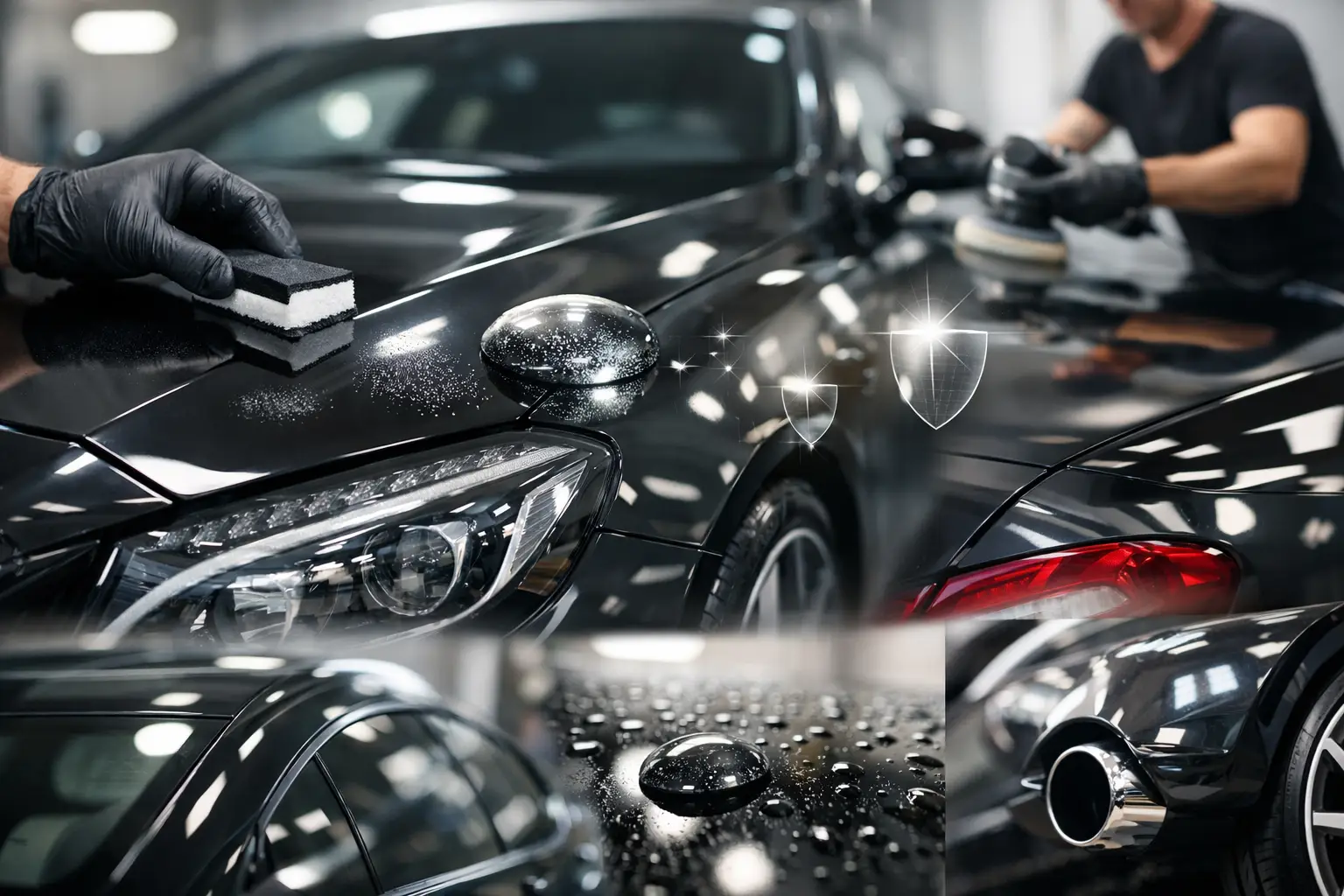
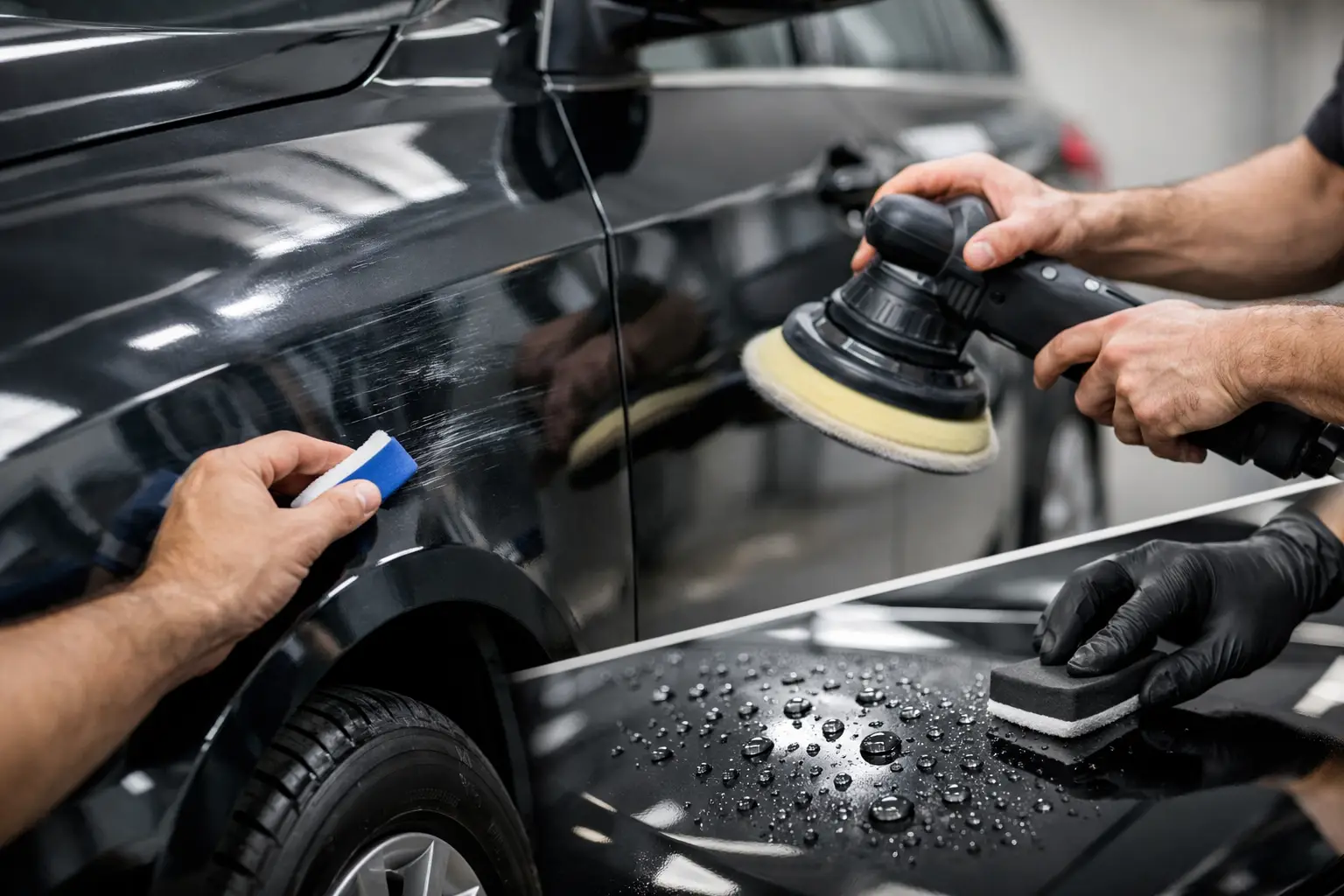
A car can be freshly washed, polished and impeccably presented, yet still look tired under Malta’s bright sun because of one overlooked issue: mineral staining. Effective water spot removal is not simply about wiping visible marks away. It is about restoring clear paintwork, glass and trim without creating new scratches, haze or unnecessary damage to the surface beneath.
Those pale rings on a bonnet or windscreen may look harmless at first. Left in place, however, they can become increasingly stubborn and begin to dull the finish you have invested in protecting. The right approach depends on what caused the marks, how long they have been present and whether they remain on the surface or have begun to etch into it.
Why water spots are more than a cosmetic problem
Water spots form when droplets dry and leave behind minerals, salts or contaminants. In Malta, sun exposure can accelerate the process dramatically. A vehicle washed in direct sunlight, parked near the coast or exposed to sprinkler water can quickly develop marks across paint, glass, chrome and gloss-black trim.
Not all spots are the same. Some are simple mineral deposits sitting on top of the surface. These are usually the easiest to remove with a controlled wash and specialist chemical decontamination. Others are more serious. If mineral-rich water or environmental contamination has dried repeatedly on hot paintwork, it can leave etched marks that sit below the surface level.
This distinction matters. Aggressively rubbing a surface deposit can scratch the clear coat. Treating etched marks with a mild cleaner alone may not improve them at all. Professional assessment prevents wasted effort and protects the vehicle’s finish.
What causes water spotting on cars?
The most familiar cause is tap water drying naturally after washing. Although it looks clean, water can carry dissolved minerals that remain once the water evaporates. The hotter the panel, the faster evaporation happens and the more pronounced the residue can become.
Sea spray is another consideration for vehicles driven or parked near the Maltese coast. Salt residue combines with dust and airborne contamination, creating a film that can compromise gloss if it is not removed safely. Rainwater can also leave marks, particularly after dry weather when it collects pollutants from the atmosphere before reaching the vehicle.
Sprinklers are a frequent culprit. They may repeatedly hit the same lower panels, windows or wheels, allowing mineral build-up to develop in concentrated areas. A quick rinse may disguise the issue temporarily, but it will not necessarily remove bonded contamination.
Even premium vehicles with ceramic coating or paint protection film are not completely immune. High-quality protection makes routine cleaning easier and helps contaminants release more readily, but it still needs correct maintenance. No coating should be treated as permission to leave mineral deposits on the car for weeks.
Water spot removal starts with diagnosis
Before any correction begins, the vehicle should be washed using safe techniques that limit contact-induced marring. This removes loose dirt so the true condition of the paint can be assessed properly. Trying to diagnose water marks over road film, dust and traffic grime leads to guesswork.
A detailing specialist will then inspect the affected areas in suitable lighting. Surface deposits often feel slightly rough and may respond to a dedicated water spot remover or a carefully selected acidic decontamination product. The product, dwell time and method must suit the material being treated. Paint, glass, polished metal, plastic trim and protective films all have different tolerances.
If the marks remain after contamination removal, they may be etched. At this stage, controlled machine polishing may be required to level the surrounding clear coat and restore a uniform reflection. This is where expertise matters most. The goal is not to remove as much paint as possible. It is to achieve the best correction with the least necessary intervention.
Surface deposits versus etched marks
Surface deposits can often be removed without polishing. This is the preferable outcome because it preserves the existing finish and avoids unnecessary abrasion. A professional-grade decontamination treatment, followed by a neutralising wash and careful drying, can bring back clarity quickly when the issue has been caught early.
Etched marks need a more considered response. They may appear as rings that remain visible even when the panel is clean and dry. Depending on their depth, light polishing can substantially reduce or remove them. Severe etching, particularly on older or neglected paintwork, may require paint correction in stages.
Glass presents its own challenge. Mineral deposits can reduce clarity and create glare, especially when driving into low sun or at night in wet conditions. Glass polishing may be appropriate for stubborn staining, but it must be carried out with the correct equipment and product choice. Household abrasives and harsh cleaners can leave haze, damage coatings or affect surrounding trim.
Why home remedies can make the finish worse
Vinegar, washing-up liquid, bathroom limescale products and abrasive pads are often suggested as quick fixes. They can seem effective because they cut through visible residue, but the trade-off can be costly. Strong household chemicals are not formulated for modern automotive surfaces, while abrasive pads can mark clear coat, gloss trim and glass.
A common mistake is applying a product to a hot panel. Heat causes chemicals to dry too quickly, increasing the risk of staining and making them harder to remove evenly. Another is scrubbing the area with a towel before the deposit has been softened. Minerals and grit trapped beneath the cloth can create fine scratches that only become obvious in direct sunlight.
A gentle DIY approach may be reasonable for fresh, light spotting. Work in the shade on cool panels, use clean microfibre towels, and dry the vehicle promptly with a dedicated drying towel or filtered-air system. If the marks remain after a safe wash, resist escalating to harsher products at home. Persistent staining is a correction issue, not a reason to take bigger risks with the paintwork.
The professional process for water spot removal
Professional water spot removal is a measured treatment rather than a one-product service. The process begins with a safe exterior clean and targeted decontamination. This establishes whether the marks are removable residue or embedded etching.
Where a chemical treatment resolves the problem, the surface is rinsed thoroughly and inspected again. Where polishing is needed, the paint is evaluated for thickness and condition before a suitable pad, machine and compound combination is selected. Test sections are used to confirm the least aggressive method capable of delivering a visible improvement.
The corrected area is then refined to enhance gloss and minimise haze. Once the finish is clean and clear, protection should follow. A quality wax, sealant, ceramic coating or paint protection film maintenance treatment can make future cleaning easier and reduce the chance of deposits bonding as strongly to the surface.
At GloboWax Malta, this detail-led approach is central to every corrective service. It respects the condition of the vehicle while pursuing the crisp reflections, depth and showroom-level finish owners expect.
Preventing water spots after treatment
Prevention is less demanding than correction, but it does require consistent habits. Wash in the shade wherever practical, especially during the hottest parts of the day. Do not allow rinse water to dry naturally on the paint, glass or trim. Dry panel by panel with clean, high-absorbency microfibre towels, paying close attention to mirrors, grilles, badges and window seals where water can continue to run out after drying.
If you use a car cover, only fit it to a clean, dry vehicle. Covering damp mineral residue against the paint can create avoidable marks. Likewise, if your vehicle is regularly exposed to sprinklers or coastal air, a more frequent maintenance wash is sensible. The exact schedule depends on where the car is parked, how often it is driven and the protection already in place.
Protective treatments also make a difference, but they are not all identical. A wax can provide attractive gloss and short-term water behaviour. A sealant generally offers longer durability. Ceramic coating provides a more resilient protective layer when properly prepared and maintained. The right option depends on your vehicle, your storage conditions and how you prefer to maintain it.
The best time to deal with water spots is when you first notice them. Prompt, careful action keeps a simple deposit from becoming a paint-correction project and helps your vehicle retain the sharp, protected finish it deserves.