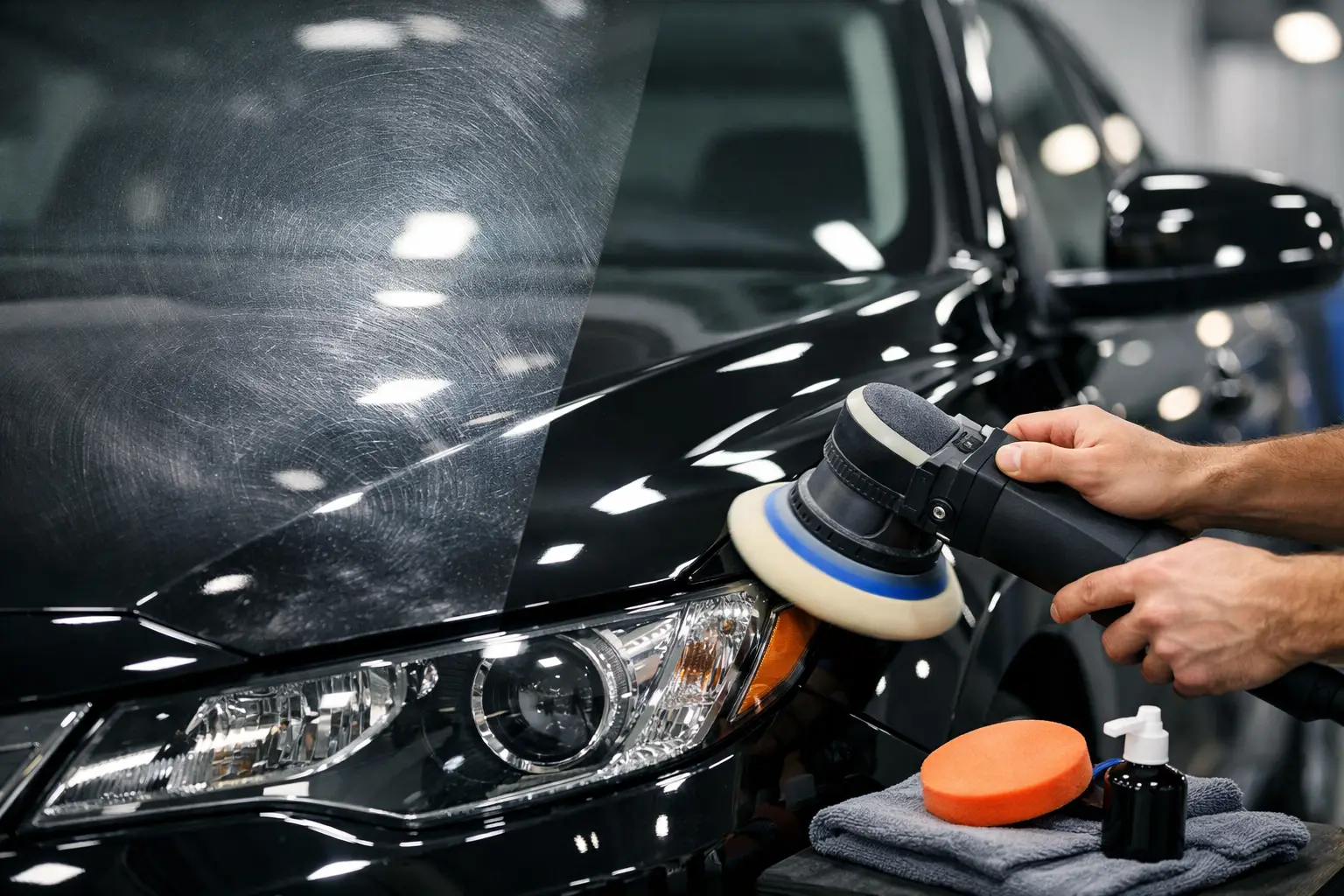
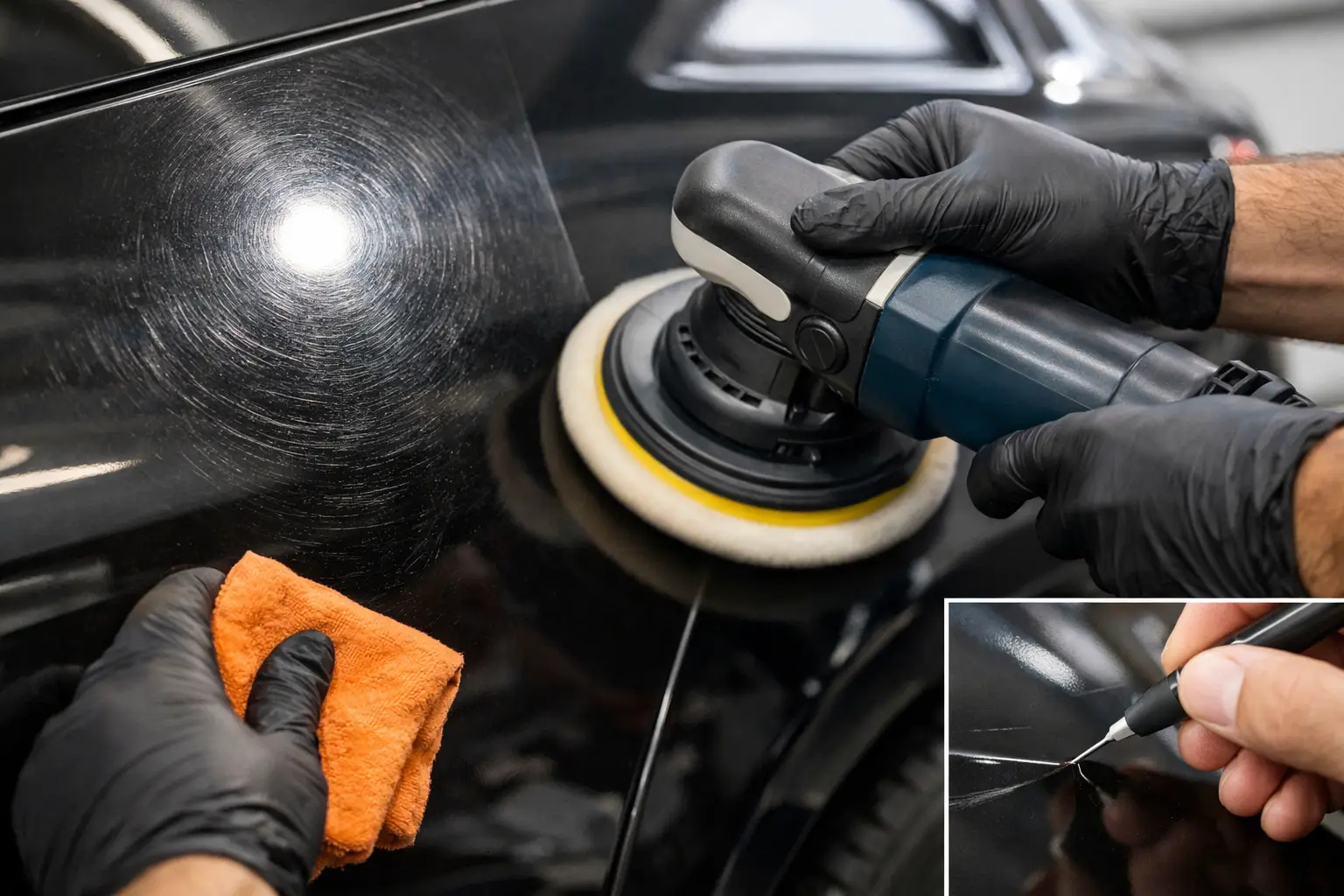
That sharp line catching the sunlight every time you walk up to your car is more than irritating – it makes the whole finish look tired. So, does paint correction fix scratches? Yes, but only the right kind. Paint correction can remove or significantly reduce many surface-level scratches, swirl marks and paint defects, but it cannot repair every scratch. The result depends on how deep the damage goes and how much healthy clear coat remains to work with.
For owners who care about presentation, resale value and long-term paint health, that distinction matters. A proper correction is not a cover-up. It is a precise process of refining the paint surface so the defect is levelled out, gloss is restored and the finish looks dramatically cleaner and sharper.
Does paint correction fix scratches or just hide them?
True paint correction does not simply mask defects for a few washes. It removes a very fine layer of clear coat around the scratch until the surrounding surface is level with the defect, or close enough that light no longer catches it so visibly. That is why the finish looks clearer, deeper and more reflective afterwards.
This is very different from glazes, fillers or low-grade polishing products that temporarily hide imperfections. Those can make paint look better for a short period, but once they wash away, the scratches return. Professional correction aims for a genuine improvement in the paint itself.
That said, there is always a limit. Vehicle paint is made up of layers, and the top clear coat is finite. If a scratch has cut too deeply, chasing full removal may be neither safe nor wise. In premium detailing, the goal is not aggressive paint removal at any cost. It is controlled refinement with protection of the finish in mind.
What types of scratches can paint correction remove?
The best candidates are light scratches that sit within the clear coat. These often come from poor washing technique, automatic car washes, dusty wipe-downs, fingernails around door handles, light contact with bags or clothing, and general wear over time. Swirl marks and hazing also fall into this category.
When these defects are shallow, correction can often remove them completely. If they are slightly deeper but still within the clear coat, they may not vanish entirely, but they can usually be reduced enough to become far less noticeable.
A quick rule professionals use is the fingernail test. If you gently run a fingernail across the scratch and it barely catches, there is a strong chance correction will help significantly. If your nail catches clearly, the scratch is more likely to be too deep for safe removal by machine polishing alone.
Clear coat scratches
These are the most common and the most correctable. Because the colour coat underneath remains intact, the surface can often be refined to restore a smooth, glossy finish.
Swirl marks and wash marring
These are exactly what paint correction is designed for. Under direct sun or workshop lighting, they make paint look dull, grey and tired. After correction, darker colours in particular regain depth and clarity.
Isolated light scratches
Single scratches from day-to-day use can often be improved dramatically, especially on panels with enough healthy paint thickness.
When paint correction will not fix scratches
If a scratch has gone through the clear coat and into the base coat or primer, paint correction will not fully remove it. In these cases, polishing the surrounding area may soften the look, but the damage itself remains. White lines, exposed primer, or scratches that look deep and sharp are common signs that touch-up work or repainting may be required.
This is where honest assessment matters. Over-polishing deep scratches can thin the clear coat without delivering a proper result. A skilled detailer knows when to correct, when to improve, and when to recommend a different repair route.
On some vehicles, previous machine polishing or poor bodyshop work also limits what can be done safely. Not every panel has the same paint depth, and not every defect should be chased to perfection. A premium finish is about balance – maximum improvement with minimum compromise.
How paint correction works
Paint correction is a machine polishing process carried out in measured stages. First, the vehicle is thoroughly washed and decontaminated so bonded fallout, tar and residue do not interfere with the polishing stage. The paint is then inspected under proper lighting to reveal the true condition of the surface.
From there, the correction stage begins using a machine polisher, specialist pads and carefully selected compounds or polishes. The combination depends on the paint type, defect severity and finish required. Some cars need only a single-stage enhancement. Others benefit from a multi-stage correction to remove heavier defects and then refine the surface to a higher gloss level.
Professional detailers will usually monitor paint thickness, test a small section first and adjust the process panel by panel. That precision is what separates genuine correction from quick polishing. The aim is always to improve the finish with control, not simply make it shiny for a few days.
Does paint correction fix scratches on every car equally?
No, and this is where expectations need to be realistic. Paint systems vary widely between manufacturers. Some clear coats are harder and require more intensive cutting and refinement. Others are softer and can correct more easily but also mark more quickly.
Colour plays a part as well. Black, navy and other dark finishes reveal scratches, swirls and haze far more readily than lighter shades. On darker cars, paint correction often delivers the most dramatic transformation because the defects are so visible to begin with.
Age and maintenance history matter too. A newer car with poor wash marring may correct beautifully. An older vehicle with repeated poor polishing, oxidation or deeper random scratches may still improve significantly, but not every mark will disappear.
What sort of result should you expect?
For light to moderate defects, a professional correction can produce a remarkable change. Paint can go from flat and heavily swirled to deep, reflective and crisp. Surface clarity improves, gloss returns and the vehicle simply looks more expensive.
But the right expectation is improvement, not fantasy. Some vehicles achieve near-perfect correction. Others are better suited to a substantial refinement that preserves paint health. A trustworthy specialist will explain that before any work begins.
For many owners, a 70 to 90 per cent improvement with strong gloss and safe clear coat preservation is a better long-term result than aggressively chasing the last few marks.
What happens after the scratches are corrected?
Once the paint has been corrected, protection becomes the next priority. Freshly refined paint is at its best when sealed properly, whether with a high-quality wax, sealant, ceramic coating or paint protection film in vulnerable areas.
Without protection, even beautifully corrected paint is exposed again to UV, washing damage, contamination and general wear. That is why correction and protection work best together. One restores the finish. The other helps preserve it.
This is also the moment to improve washing technique. Many scratches return not because correction failed, but because the car goes back to sponge washes, harsh brushes and rushed drying. Safe maintenance is what keeps the finish looking refined.
Is paint correction worth it for scratch removal?
If the scratches are within the clear coat and the overall finish has lost its clarity, absolutely. Paint correction does more than target individual marks. It restores the paint as a whole, lifting gloss, depth and definition across the vehicle.
For daily drivers, it helps protect value and keeps the car looking properly cared for. For prestige, performance or enthusiast-owned vehicles, it brings the finish back to the standard it deserves. And before applying ceramic coating or selling a car, correction can make a noticeable difference to presentation.
For drivers in Malta dealing with strong sunlight, salt in the air and constant exposure, paint condition tends to show quickly. A professionally corrected and protected vehicle does not just look sharper on day one – it holds its appearance far better over time.
At GloboWax Malta, that level of finish is treated as craftsmanship, not a quick cosmetic service.
So, does paint correction fix scratches?
It fixes many scratches, but not all of them. If the damage is light and sits in the clear coat, paint correction can often remove it completely or reduce it to the point where it no longer distracts from the finish. If the scratch is deeper, correction may improve it, but paint repair could still be needed.
The key is proper inspection, measured technique and a focus on what is safe for the paint. When done well, paint correction does not just make a car shinier. It restores precision, clarity and pride of ownership – and that is something every well-kept vehicle deserves.