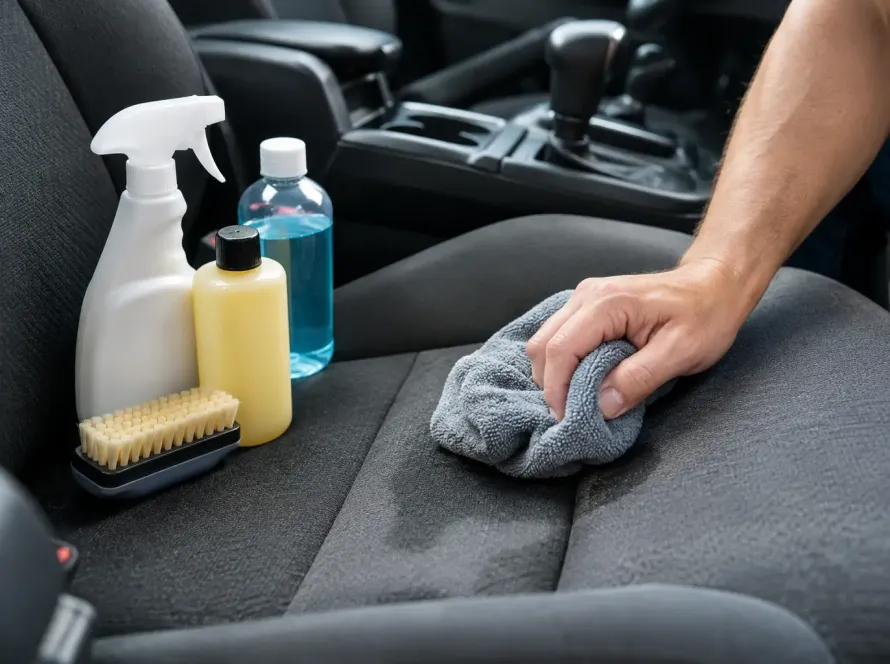
A morning coffee on the commute, sun through the windscreen, a child’s snack on the rear seat – these are ordinary moments that can leave a lasting mark on an otherwise immaculate interior. This fabric protection review examines what a professional treatment actually delivers, where its limits lie and why it can make a meaningful difference to the way your vehicle looks, feels and holds its value.
What fabric protection is designed to do
Fabric protection is a specialist treatment applied to cloth seats, carpets, door inserts and other absorbent interior surfaces. Once correctly applied and cured, it creates an invisible barrier around the fibres. Liquids are less able to soak in immediately, while dry dirt and everyday grime are easier to remove before they become embedded.
The result is not a plastic coating or a change in texture. A quality professional product should preserve the natural feel and appearance of the upholstery while improving its resistance to life on the road. In a climate like Malta’s, it also offers welcome support against UV exposure, dust and the frequent opening of hot vehicle doors.
For owners who take pride in a clean cabin, the benefit is straightforward: less permanent staining, simpler maintenance and a better chance of keeping original upholstery looking properly cared for.
Fabric protection review: the real-world benefits
The strongest test of any protection treatment is not the bottle or the promise. It is how the interior performs months later, when the car is being used as intended.
Spills are easier to deal with
A protected fabric surface gives you valuable time. Rather than immediately disappearing into the seat cushion, water-based spills are more likely to bead or sit on the surface. Blotting the area promptly with a clean microfibre cloth can prevent a minor accident becoming a visible stain.
This matters most with drinks, rainwater, muddy footwear and the everyday spills that occur in family cars. It can also help reduce the effect of food residue and light grime, although coloured drinks, oils and sauces should still be addressed without delay. Protection buys time – it does not make neglect harmless.
Interior cleaning becomes more controlled
Unprotected upholstery absorbs contamination, which often means more aggressive cleaning is needed later. Repeated heavy cleaning can leave fabric looking tired, create water marks or affect the consistency of the finish across a seat.
With fabric protection in place, routine upkeep is more manageable. Vacuuming, gentle upholstery cleaning and prompt spot treatment are usually enough to keep the interior presentable. That is particularly valuable for daily drivers, where maintaining a high standard should not require a full interior detail every few weeks.
The cabin retains a fresher appearance
Seat bolsters, driver footwells and rear benches show wear long before many owners expect. Dirt settles into fibres, pale fabrics lose their crisp appearance and darker materials can develop a dull, uneven look.
A protective treatment cannot stop mechanical wear from getting in and out of the vehicle, but it reduces the grime that makes wear look worse. When paired with sensible maintenance, it helps upholstery retain the clean, uniform appearance that gives a cabin its showroom-quality impression.
It supports resale presentation
A buyer may not know which brand of protector has been applied, but they will notice the condition of the seats, carpets and boot lining. A clean, unstained interior signals care. It suggests that the vehicle has been maintained rather than merely cleaned when necessary.
For premium, performance and family vehicles alike, original interior condition is part of the ownership story. Fabric protection is a relatively focused investment that can help preserve that story when it is time to sell or part exchange.
What professional application changes
The difference between a credible result and a disappointing one often comes down to preparation. Applying protector over dust, oils or old stains can lock in the very contamination you want to remove. It may also cause uneven coverage and reduce the treatment’s effectiveness.
A professional service begins with proper assessment and cleaning. The upholstery must be thoroughly vacuumed, treated where necessary and allowed to dry before protection is applied evenly. The product then needs sufficient curing time. Skipping any of these stages may leave areas vulnerable or create an inconsistent finish.
At GloboWax Malta, fabric protection is approached as part of interior preservation rather than an add-on spray. The aim is to prepare the material correctly, protect it precisely and leave the cabin looking natural, refined and ready for everyday use.
Professional products are also chosen for compatibility with automotive materials. Modern interiors often combine cloth, Alcantara-style trims, carpet, leather and synthetic surfaces in the same cabin. Each material requires the correct process. A one-product approach can be convenient, but convenience is not the same as precision.
Where fabric protection has limits
A balanced review should be clear about what fabric protection cannot do. It does not repair torn fabric, flattened cushioning, severe dye transfer or existing damage caused by harsh chemicals. It will not remove stains already set deep within the fibres, although a professional interior detail may improve them before protection is applied.
It is also not permanent. Friction, vacuuming, cleaning products, passenger use and time gradually reduce the protective effect. Front seats and driver footwells generally need attention sooner than rarely used rear seats. The lifespan depends on the product, how the vehicle is used and how it is maintained.
Heavy oil, ink, sun cream, diesel residue and strongly coloured liquids can still stain if they are left untreated. The right response is prompt action: blot rather than scrub, avoid saturating the fabric and use a suitable cleaner if required. Scrubbing forces contamination deeper and can roughen the fibres.
For this reason, fabric protection should be viewed as a performance layer, not an excuse to delay cleaning. It improves your margin for error and reduces maintenance effort, but it works best with sensible habits.
Is it worth it for your vehicle?
For a car that is rarely used and stored indoors, fabric protection may feel less urgent. Yet even occasional use exposes a cabin to dust, UV light and unexpected spills. For most owners, its value becomes clearer in the vehicles that work hardest: school-run cars, executive daily drivers, leased vehicles, enthusiast cars and vehicles with light-coloured interiors.
It is especially worthwhile if you have recently purchased a car with clean original upholstery, completed an interior detail or corrected stains that you do not want returning. Applying protection when the fabric is already in excellent condition gives it the best foundation.
The calculation is not only about avoiding one major stain. It is about maintaining a standard over years of ownership. A well-kept interior changes the experience every time you open the door, and it protects one of the areas buyers inspect most closely.
How to make the treatment last longer
Fabric protection performs best when it is supported by calm, regular care. Vacuum the seats and carpets frequently enough to remove dry grit before it works into the fibres. Attend to spills promptly, using a blotting motion with a clean cloth rather than rubbing the affected area.
Avoid household cleaners, bleach-based products and heavily fragranced sprays. These can leave residues, alter the fabric’s appearance and weaken the protective layer. If a deeper clean is needed, use an automotive-safe method appropriate for the upholstery or arrange professional care.
It is also wise to reassess protection after an intensive interior clean. If water stops beading and begins absorbing quickly, the treatment may be due for renewal. This is not a failure – it is a practical sign that the protective layer has done its work and needs replenishing.
A protected interior will still be lived in, and that is exactly the point. Treat the next spill quickly, maintain the surfaces with care and your cabin can continue to reflect the same standards as the paintwork outside.